What does it mean to be a scientist, and who gets to decide?
Written by SNAP members Doga Tasdemir and Alex Byrne, who equally contributed to this article.
Footnotes are denoted with superscript. References are denoted with brackets.
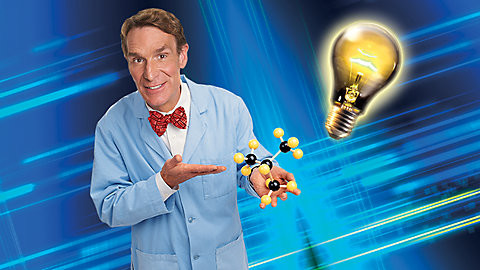
Bill Nye, famous science communicator and educator who is well-known for his television program “Bill Nye the Science Guy” (source).
If I asked you to picture a scientist, what comes to mind? Perhaps you imagine a person in a bright white lab coat, mixing vibrantly-colored chemicals or peering into a microscope. Or perhaps a household name such as Einstein, Curie, or Hawking immediately pops into your head. Maybe you think of someone closer to home: a friend, family member, or even yourself. Yet the scientists we visualize are only a small fraction of those actually doing scientific work.
If you look up the word “scientist” in the dictionary, you’ll find this definition: “a person learned in science and especially natural science” [1], where science itself is defined as “knowledge or a system of knowledge covering general truths or the operation of general laws especially as obtained and tested through scientific method” [2]. This broad definition intentionally leaves room for interpretation. For one, there’s the question of what we consider to be a science. Fields such as chemistry, physics, and biology are firmly established as “hard” sciences: precise, quantifiable, and rarely questioned. Meanwhile, fields such as psychology and sociology fall into a grayer area. They are often referred to as “soft” sciences, and face more skepticism. It’s no coincidence that these fields have historically drawn more women. The hard/soft divide often says less about scientific rigor and more about whose work gets taken seriously.
What about those who hold science degrees but now work in policy, education, or industry? Do those individuals forfeit their scientist identity? What degree of training is necessary to be considered a scientist? Do you need a Ph.D.? You could even make a fair argument that since we all question our surroundings and use findings to deepen our understanding of them, we are all scientists. These questions, and the discomfort that comes with their ambiguity, reveals something important about who we view as worthy of being called a scientist.
Now, more than ever, is it important to define what a scientist does and who should be labeled as such. Public trust in science has been eroded by mis- and disinformation, politicization, and controversies on subjects like vaccines, climate change, gene editing, and artificial intelligence. Institutions urge the public to “trust the science,” but this implicitly assumes that the qualifications of a scientist and their authority are agreed upon. If science is an exclusive, mysterious club that few belong to, why would the public trust scientists? The truth is that people have preconceived notions of what it means to be a scientist, and these notions hold meaning. In an era where there is concern regarding attacks on federal funding of science, public trust in science, and the role of science in politics, it is important to consider how we as individuals and a society perceive science. Building genuine trust in science requires more than just sharing scientific truths with the public. It requires allowing people to feel as if science is something they can be a part of and have a dialogue with.
When the dominating image of a scientist is narrow and exclusionary, it sends a message to students that science is not for them. Research shows that science identity, the degree to which a person sees themselves, and is seen by others, as a scientist, is strongly correlated with student interest and success, particularly for groups that are under-represented in the sciences [3]. One long-term study followed the experiences of 15 women of color during their undergraduate and post-graduate careers in science. Although all participants ultimately achieved successful careers in science, the participants who received less recognition for their scientific skills and interests felt weaker senses of connection and belonging to the scientific community and experienced more difficulty in their career trajectories [3]. Many of the negative experiences these participants had were results of clashes between their identities as women of color and the white male norms that pervade academic science.
Exclusion within science, whether intentional or not, often begins early and persists throughout the education process. STEM classes have reputations for being academically rigorous, a badge that many students and teachers wear with pride. Students who fit the traditional mold of a scientist, such as by displaying strong analytical skills and an aptitude for early science classes, are encouraged, whereas those who do not are told that science is not for them. This creates a negative feedback loop where students have difficulty succeeding in science because they cannot view themselves as scientists, which in turn further perpetuates a lack of science identity. Intentional efforts to cultivate a science identity in students can remedy this by increasing interest in STEM degrees for K-12 students [4], interest in science occupations [5], and academic performance within STEM disciplines [6]. Broadening the image of a scientist therefore achieves not just symbolic inclusion, but also retention of talent in the field.
The importance of identity and inclusion within science is not limited to the general perception of students as scientists. Another study asked both professional chemists and undergraduate students to describe their perspective of a chemistry identity [7]. Although chemistry is a broad subject with many areas of study, participants consistently described a “real” chemist as someone who has a chemistry degree, works in an academic research setting, and works hands-on with chemicals in the laboratory. Conversely, participants felt that chemists who work at the intersections of multiple disciplines (e.g., biochemists and chemistry education researchers) and those in industry are not often perceived as “real” chemists.
“As someone who just finished a chemistry PhD in a field of study that is highly connected to astronomy and astrophysics, there have been plenty of times when I have similarly questioned my identity as a chemist.” — Alex Byrne
In a world where scientific challenges are increasingly interdisciplinary, these institutions continue to prioritize compartmentalized identities and research that they view as academically pure and rigorous.
This gatekeeping is not incidental; in fact, it is a structural issue within academia and within science. The prestigious hierarchy of academic science places the tenure-track researcher at the top of the pyramid and treats everyone else as a departure from the ideal. Scientists who move to industry, government, or teaching are considered lesser, as if their years of training, discoveries, and expertise are now meaningless. Their knowledge and curiosity no longer count as scientific inquiry. Similarly, research technicians who operate laboratory equipment, often running the same experiments as staff scientists or graduate students, are not considered scientists by some. Without the work and expertise of these technicians, discoveries would not be made at the same rate, papers would not be written, and grants would not be submitted.
The ability to act as a scientist is not limited to those with formal education or training. There are numerous examples where the involvement of the general public in the scientific process, or citizen science, has led to critical scientific discoveries. In astronomy, citizen science projects maintained by NASA provide opportunities for everyday people to contribute to cutting edge astronomy, such as searching for exoplanets and star-forming regions within telescope data [8]. Contributions from citizen scientists have enabled the discovery of more than 200 new planets [9] and a new type of atmospheric aurora [10]. These projects make science accessible to anyone, regardless of background, while facilitating scientific advance.
Another example is the app iNaturalist, a platform that allows anyone to record observations of plants, animals, and fungi contributing to a global database used by researchers worldwide. What began as a graduate school project is now one of the largest biodiversity databases in existence, contributing to species distribution tracking, monitoring of climate change effects, and new species identification. Citizen science through iNaturalist has resulted in the rediscovery of species previously thought to be extinct, demonstrating that science is not confined to labs or universities and can happen anywhere, by anyone [11].
Beyond citizen science, civic science empowers communities to work alongside scientists to shape policy that supports their needs. This is especially important for tackling modern problems regarding health and the environment. While science is the necessary lens through which we learn about these problems and develop solutions, guidance from communities allows this science to be done in a way that actually benefits the people that need it.
One striking example is that of the collaboration between concerned citizens and professional scientists during the Flint Water Crisis. This was led in large part by Flint resident LeeAnne Walters, who was able to prove that there were dangerous levels of lead in municipal water through large-scale testing [12]. These people were doing science to the fullest sense of the word, regardless of their academic or professional status. What citizen scientists in Flint also illustrated is the connection between scientific credibility and community trust. When we define science narrowly, as something that happens in accredited institutions by credentialed individuals following prescribed methodologies, we not only exclude other ways of knowing, we also undermine the relationship between science and the public that makes trust possible. People are more likely to trust an institution they feel represented by.
Similarly, the history of Western science is entangled with colonialism, and Indigenous knowledge has long been a casualty of that relationship. Plants used medicinally by Indigenous communities for generations were studied, documented, and patented by Western scientists, often with no acknowledgment of the communities that had cultivated that knowledge for centuries [13]. The rosy periwinkle, for example, was used in traditional Malagasy medicine long before its compounds became the basis for two life-saving cancer drugs, generating billions in revenue for Eli Lilly, with little benefit to Madagascar or its people [14]. These are reminders that scientific knowledge has always existed outside of Western institutions, even when it has not been recognized as such. Cultural knowledge, from agricultural practices to wayfinding techniques, have been developed through repeated observation and collective experience, passed down and refined across generations. This process of shared validation and refinement is, at its core, not so different from the scientific method and the peer review process it relies on. Through this lens, science becomes less of an identity and more of a process we engage with collectively and build together.
Although the word scientist invites an open-ended interpretation, in reality there are many important groups whose statuses as scientists continue to be neglected. Challenging the rigid assumptions around scientist identity is not about lowering standards. It is about recognizing that the standards themselves have been designed to consolidate power and authority. The scientific community has much to gain from a wider circle: more diverse perspectives, stronger public relationships, and a more honest accounting of how knowledge is synthesized. Much work remains to be done with rebuilding scientific institutions that benefit us all, including broadening perspectives regarding who gets to be considered a scientist. The question of who counts as a scientist is, at its core, a question about who we think science is for.
Recognition:
Doga Tasdemir is a PhD student in Infectious Disease and Immunity at the Temple University Lewis Katz School of Medicine. Her research focuses on brain aging and inflammation due to opioid addiction and viral infection.
Alex Byrne received his PhD in Chemistry from the Massachusetts Institute of Technology where he studied the formation of organic molecules in interstellar environments.
Special thanks to the following SNAP members who provided feedback on this article: Cael Dant, a botanist at Northwestern University and the Chicago Botanic Garden studying the physiology, ecological interactions, and genomics of North American carnivorous plants; Breelyn Karno; Sol Taylor-Brill, a PhD candidate in Molecular, Cellular, Developmental Biology, and Genetics at the University of Minnesota with a focus on statistical and population genetics; and Jordan Williams, a pharmacology PhD candidate studying how to alter the lung’s innate immune responses to better treat chronic respiratory diseases.
References:
- “scientist.” Merriam-Webster.com. 2026. (23 June 2026)
- “science.” Merriam-Webster.com. 2026. (23 June 2026)
- Carlone, H. B., & Johnson, A. (2007). Understanding the science experiences of successful women of color: Science identity as an analytic lens. Journal of Research in Science Teaching, 44(8), 1187–1218.
- Lockhart, M. E., Kwok, O.-M., Yoon, M., & Wong, R. (2022). An important component to investigating STEM persistence: The development and validation of the science identity (SciID) scale. International Journal of STEM Education, 9(1), 34.
- Stets, J. E., Brenner, P. S., Burke, P. J., & Serpe, R. T. (2017). The science identity and entering a science occupation. Social Science Research, 64, 1–14.
- Fink, A., Frey, R. F., & Solomon, E. D. (2020). Belonging in general chemistry predicts first-year undergraduates’ performance and attrition. Chemistry Education Research and Practice, 21(4), 1042–1062.
- Castano, G., Dou, R., Linh, N., Mohammed, N., Lopez, A., & Underwood, S. M. (2025). Identity Development in Chemistry: The Social Functionality and Moral Significance of Being (Considered) a “Real” Chemist. JACS Au, 5(9), 4408–4426.
- Citizen Science Projects — NASA Science. (2025, June 9).
- Chu, J. (2018, January 11). Citizen scientists discover five tightly packed exoplanets. MIT News | Massachusetts Institute of Technology.
- MacDonald, E. A., Donovan, E., Nishimura, Y., Case, N. A., Gillies, D. M., Gallardo-Lacourt, B., Archer, W. E., Spanswick, E. L., Bourassa, N., Connors, M., Heavner, M., Jackel, B., Kosar, B., Knudsen, D. J., Ratzlaff, C., & Schofield, I. (2018). New science in plain sight: Citizen scientists lead to the discovery of optical structure in the upper atmosphere. Science Advances, 4(3), eaaq0030.
- Mesaglio, T., Bean, A. R., & Bean, A. (2026). Rediscovery of a presumed extinct plant species, Ptilotus senarius (Amaranthaceae), through iNaturalist. Australian Journal of Botany, 74(1), BT25063.
- McQuaid, J. (n.d.). Without These Whistleblowers, We May Never Have Known the Full Extent of the Flint Water Crisis. Smithsonian Magazine. Retrieved June 22, 2026, from
- Imran, Y., Wijekoon, N., Gonawala, L., Chiang, Y.-C., & De Silva, K. R. D. (2021). Biopiracy: Abolish Corporate Hijacking of Indigenous Medicinal Entities. The Scientific World Journal, 2021, 8898842.
- Biopiracy and the Battle Over Seeds — The Super-Seeders. (n.d.). Retrieved June 22, 2026, from