Wild relatives and living collections: How plant science uses genetics to better crops and conservation
Written by SNAP members Cael Dant and Casey Chan, who contributed equally to this piece.
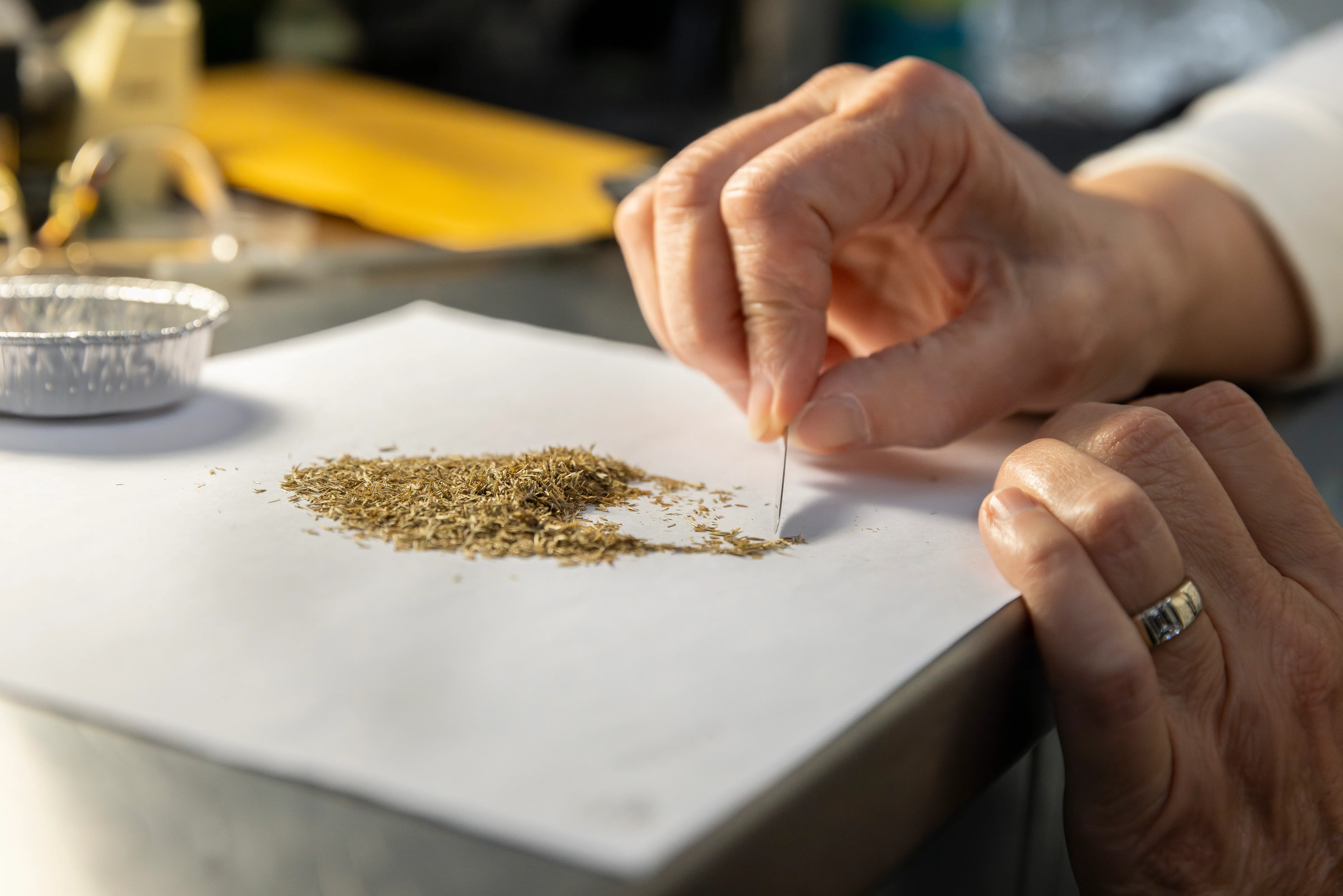
A volunteer cleans seeds to prepare them for storage in the Dixon National Tallgrass Prairie Seed Bank at the Chicago Botanic Garden. Photo: Manuel Martinez, WBEZ Chicago
When we think of plant genetics, particularly in the context of policy, our minds likely go to one of three things: agriculture, cannabis, or the discourse around genetically modified organisms (GMOs). We’re not likely to associate genetics with conservation or ecological restoration, nor do we tend to think of it as a field with a particularly long history. However, recent work in plant science has brought a new focus onto using genetics to conserve imperiled species, as well as to produce crops with greater resilience and pest resistance, increasing yields and decreasing the need for pesticide use.
Crop Wild Relatives
Crop breeding has been used since the beginning of civilization to develop plant varieties suitable for human consumption [1]. As the world has changed, with a rapidly increasing population and a changing climate, growers have had to adapt their practices and crop usage, and fast [6]. For this, scientists have turned to traits already present in wild relatives of the crops we produce. In the past, crops may have been selected based on traits including taste, hardiness, and size. One historical example is the development of corn (maize), which is thought to have been domesticated 8,000–10,000 years ago from the wild grass teosinte in southern Mexico. Over time, certain maize varieties became commercially successful because of their tolerance of temperate climates, and hybrids of these were developed in the 1930s to increase growing efficiency and fertilizer uptake [2,3].
Another interesting example of both crop breeding and trait selection is the banana cultivar we consume today, the Cavendish banana. In the 19th century, the Gros Michel banana was the major crop used in banana production and trade. However, a fungal infection called the Panama disease wiped out this variant in the 1960s. The Cavendish banana, which had been maintained as an interesting specimen in botanical gardens in the United Kingdom and Honduras, subsequently became the primary commercial cultivar [4]. Despite this victory, Cavendish bananas are not genetically diverse and may still be vulnerable to a different strain of Panama disease in the future, necessitating further exploration of other banana cultivars [5].
Another successful application of crop development using traits from other plant varieties is the work of Pamela Ronald, who genetically engineered rice strains to be hardier in times of extended flooding [7]. Her work focused on the introduction of the gene SUB1 from an ancient East Indian rice variety to other rice varieties, making them more resistant to flooding [7]. More recently, her lab has also begun working on making rice variants that are drought-resistant [8].
While wild relatives have proven an invaluable resource for sustainable agriculture, they are not immune themselves to the effects of climate change. Many wild plant species are not predicted to survive the next few decades. A recent study predicted that 7%-16% of the world’s plant species are likely to lose at least 90% of their habitat and effectively go extinct in about 55 to 75 years [9].
To ensure the longevity of these resources, various conservation agencies have worked to document the current state of protection of wild relatives, and public genebanks make plant genetic diversity information accessible to scientists and educators at all levels [10,11,12]. This has led to collaborations for the conservation of specific types of wild plants. For example, consider wild cranberries. Through a collaboration between the U.S. Forest Service and the USDA Agricultural Research Service (ARS), wild crop varieties of Vaccinium macrocarpon (large cranberry), a commercially important species, and its relative Vaccinium oxycoccos (small cranberry) were surveyed throughout the United States. Leaf samples were collected from Tennessee, North Carolina, Virginia, and West Virginia, and this widespread sampling made it possible to measure genetic variation through molecular analysis of the DNA in the leaf tissue [13]. Maintaining a record of genetic variation in wild samples in this way can ensure that we have access to novel characteristics to modify our crops in the future to stave off plant crises like the Panama disease [14].
Along with the leaf samples in this project, cranberry seeds were also collected from different populations to be stored long-term in the U.S. National Plant Germplasm System. Collaboration in all parts of this process, from sample collection to seed banking, is necessary for the longevity of agriculturally important crops [15].
Seed Banking and Living Collections
If you have heard of seed banking, it’s likely been in the context of the Global Seed Vault in Svalbard, Norway — often sardonically referred to in popular media as the “doomsday vault” [16]. However, regional seed banks of various sizes exist throughout the world, often containing seeds endemic to their localities while also incorporating “redundant” species held by other seed banks for increased security [17]. Seed collection sites are strategically chosen to maximize genetic diversity while minimizing negative impact on wild populations, and seeds are often shared between institutions and communities [18]. Seed banks rely heavily on volunteer labor, primarily for cleaning and counting seeds and preparing them for long-term storage. This provides valuable opportunities for collaboration between scientific institutions, students, local communities, hobbyists, and community scientists [17]. Though seeds frozen in a seed bank are not actively growing, they are very much alive, and their potential uses range from restoring native ecosystems years in the future, to repopulating imperiled or extinct-in-the-wild species, to serving as an archive of genetic material for future study.
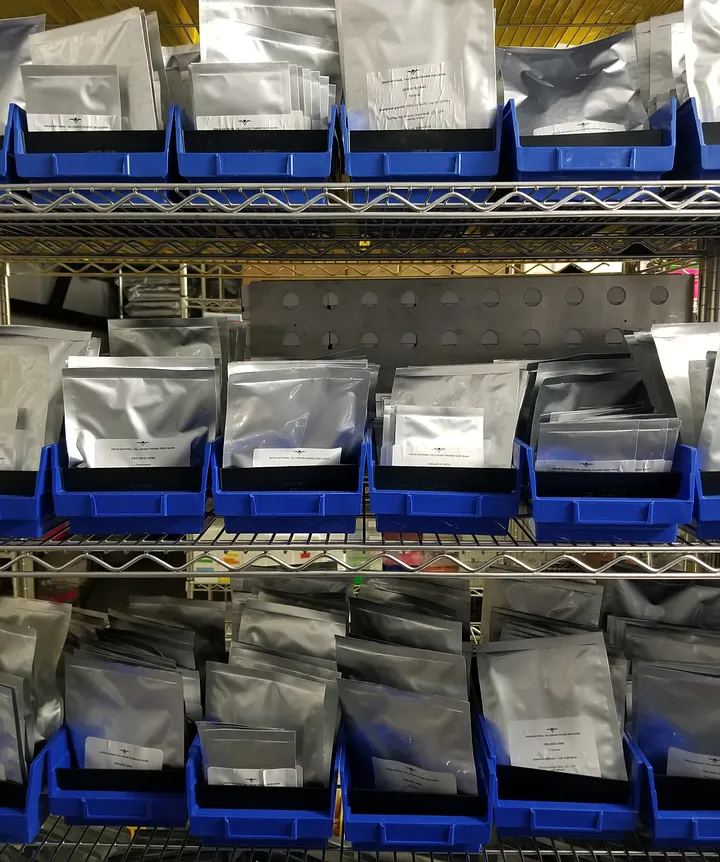
Racks of frozen seeds stored in the Dixon National Tallgrass Prairie Seed Bank. Each sealed envelope contains an individual collection of seeds. Photo: Cael Dant
Seed banks are an invaluable resource for research and conservation alike, but not all seeds can be banked with current technology. Many tropical taxa, including agriculturally important ones like Artocarpus (the genus that includes jackfruit, breadfruit, and other food sources) produce what seed researchers refer to as “recalcitrant seeds”, meaning they cannot survive the long-term freezing required for banking [19]. For many plants, an actively growing living collection, such as in a botanic garden or managed nature preserve, is the only viable means of ex-situ (outside of the wild) conservation. Pollen banking is another recent innovation in plant conservation, allowing for the long-term storage not just of embryos (seeds), but of gametes as well [20].
Conservation-focused zoos have long made strategic breeding choices in order to ensure the most genetic diversity possible in the next generation for the health and longevity of their animal species. In recent years, botanic gardens have also begun employing the “zoo model” in their plant collections, making genetics-informed choices when crossing plants in their collections or when sharing pollen between institutions [21]. Many plants are able to reproduce asexually, resulting in genetically identical offspring and necessitating the use of molecular techniques to assess the genetic diversity of a population. A collection of 100 individuals becomes much less significant in terms of conservation value when it turns out 95 of them are clones!
The best way we can conserve wild plant species and their ecosystems is, of course, to respect their natural habitats and the local communities who often serve as their stewards. Living collections are an important component of conservation, but Western plant science must also be mindful of its colonial history and understand that taking living material from the wild, no matter the intent, scientific merit, or legality, has often meant removing culturally important plants from their communities without consent. Plant conservation needs policy that supports research while still protecting and respecting wild populations and their communities. Much of this research takes place at botanic gardens, museums, and other public institutions, often in collaboration with local communities. Policy changes that reduce funding to these institutions threaten more than just their value as places to visit — they could destroy millennia of stored adaptations that could prove vital to the future of ecological restoration and agriculture, as well as the development of technologies for sustaining these resources far into the future.
References:
- Wieczorek, A., & Wright, M. (2012). History of Agricultural Biotechnology: How Crop Development has Evolved | Learn Science at Scitable. Nature.Com.
- Hake, S., & Ross-Ibarra, J. (2015). Genetic, evolutionary and plant breeding insights from the domestication of maize. eLife, 4.
- corn : USDA ARS. (2023). Usda.Gov.
- Ordonez, N., Seidl, M. F., Waalwijk, C., Drenth, A., Kilian, A., Thomma, B. P. H. J., Ploetz, R. C., & Kema, G. H. J. (2015). Worse Comes to Worst: Bananas and Panama Disease — When Plant and Pathogen Clones Meet. PLOS Pathogens, 11(11), e1005197.
- Drenth, A., & Kema, G. (2021). The Vulnerability of Bananas to Globally Emerging Disease Threats. Phytopathology®, 111(12).
- Lindsey, R., & Dahlman, L. (2025, May 29). Climate Change: Global Temperature. Climate.Gov; National Oceanic and Atmospheric Administration.
- Emerick, K., & Ronald, P. C. (2019). Sub1 Rice: Engineering Rice for Climate Change. Cold Spring Harbor Perspectives in Biology, 11(12), a034637.
- Wiebe, K., Lotze-Campen, H., Sands, R., Tabeau, A., van der Mensbrugghe, D., Biewald, A., Bodirsky, B., Islam, S., Kavallari, A., Mason-D’Croz, D., Müller, C., Popp, A., Robertson, R., Robinson, S., van Meijl, H., & Willenbockel, D. (2015). Climate change impacts on agriculture in 2050 under a range of plausible socioeconomic and emissions scenarios. Environmental Research Letters, 10(8), 085010.
- Wang, J., Oliveira, B. F., Moore, F. C., Kozar, D. J., Fu, Y., & Dong, X. (2026). Climate-induced range shifts support local plant diversity but don’t reduce extinction risk. Science, 392(6798), 648–654.
- Greene, S. L., Williams, K. A., Khoury, C. K., Kantar, M. B., & Marek, L. F. (Eds.). (2019). North American Crop Wild Relatives, Volume 2. Springer International Publishing.
- Crop Trust. (2021). Crop Wild Relatives Project.
- Gepts, P. (2006). Plant Genetic Resources Conservation and Utilization: The Accomplishments and Future of a Societal Insurance Policy. Crop Science, 46(5), 2278–2292.
- Complementary Conservation of Wild Cranberry. (2025). Usda.Gov.
- Migicovsky, Z. (2025). Genomic resources for crop wild relatives are critical for perennial fruit breeding and conservation. American Journal of Botany, 112(7).
- Khoury, C. K., Greene, S. L., Krishnan, S., Miller, A. J., & Moreau, T. (2019). A Road Map for Conservation, Use, and Public Engagement around North America’s Crop Wild Relatives and Wild Utilized Plants. Crop Science, 59(6), 2302–2307.
- Svalbard Global Seed Vault. (2017). Svalbard Global Seed Vault.
- Chicago Botanic Garden. (n.d.). Seed Bank.
- Seeds of Success Native Seed Collection Program. (n.d.). BLM.gov.
- Wardani, Fitri & Efendi, D & Purwoko, Bambang & Rahmad Suhartanto, Mohamad & Latifah, Dian. (2024). PHYSIOLOGICAL MATURITY AND CRITICAL MOISTURE CONTENT OF TERAP (ARTOCARPUS ELASTICUS REINW. EX BLUME) FOR EFFECTIVE SEED BANKING. SABRAO Journal of Breeding and Genetics. 56. 1095–1109.
- Chicago Botanic Garden. (n.d.). Pollen Bank.
- Wood, J., Ballou, J. D., Callicrate, T., Fant, J. B., Griffith, M. P., Kramer, A. T., Lacy, R. C., Meyer, A., Sullivan, S., Traylor-Holzer, K., Walsh, S. K., & Havens, K. (2020). Applying the zoo model to conservation of threatened exceptional plant species. Conservation biology : the journal of the Society for Conservation Biology, 34(6), 1416–1425.
Recognition:
Cael Dant is a graduate researcher at Northwestern University and the Chicago Botanic Garden studying the physiology, ecological interactions, and genomics of North American carnivorous plants.
Casey Chan is a PhD candidate in Chemistry and a leader of the Stanford Science Policy Group studying plant-insect interactions.
Special thanks to the following SNAP members who provided feedback on this article: Andrew Mattson, a physics PhD student developing quantum technologies for dark matter detection, gravitational wave observation, and life science/medical applications. He also serves as President of the Science Policy and Diplomacy Group at Johns Hopkins; Emma Scales, a fungal biologist and PhD candidate at Cornell University with a background in technical and journalistic writing; and Jordan Williams, a pharmacology PhD candidate studying how to alter the lung’s innate immune responses to better treat chronic respiratory diseases.