The need for farmer-forward sustainable livestock policy, not cheap foreign beef
Written by SNAP member Emma Scales
TL; DR: Consumers’ woes are farmers’ woes. Radical approaches to agricultural policy that put farmers first can create room to incentivize the sustainable practices that already exist in livestock rearing but are currently suppressed by industry monopolies.
Footnotes are denoted with superscript numbers. References are denoted with brackets.
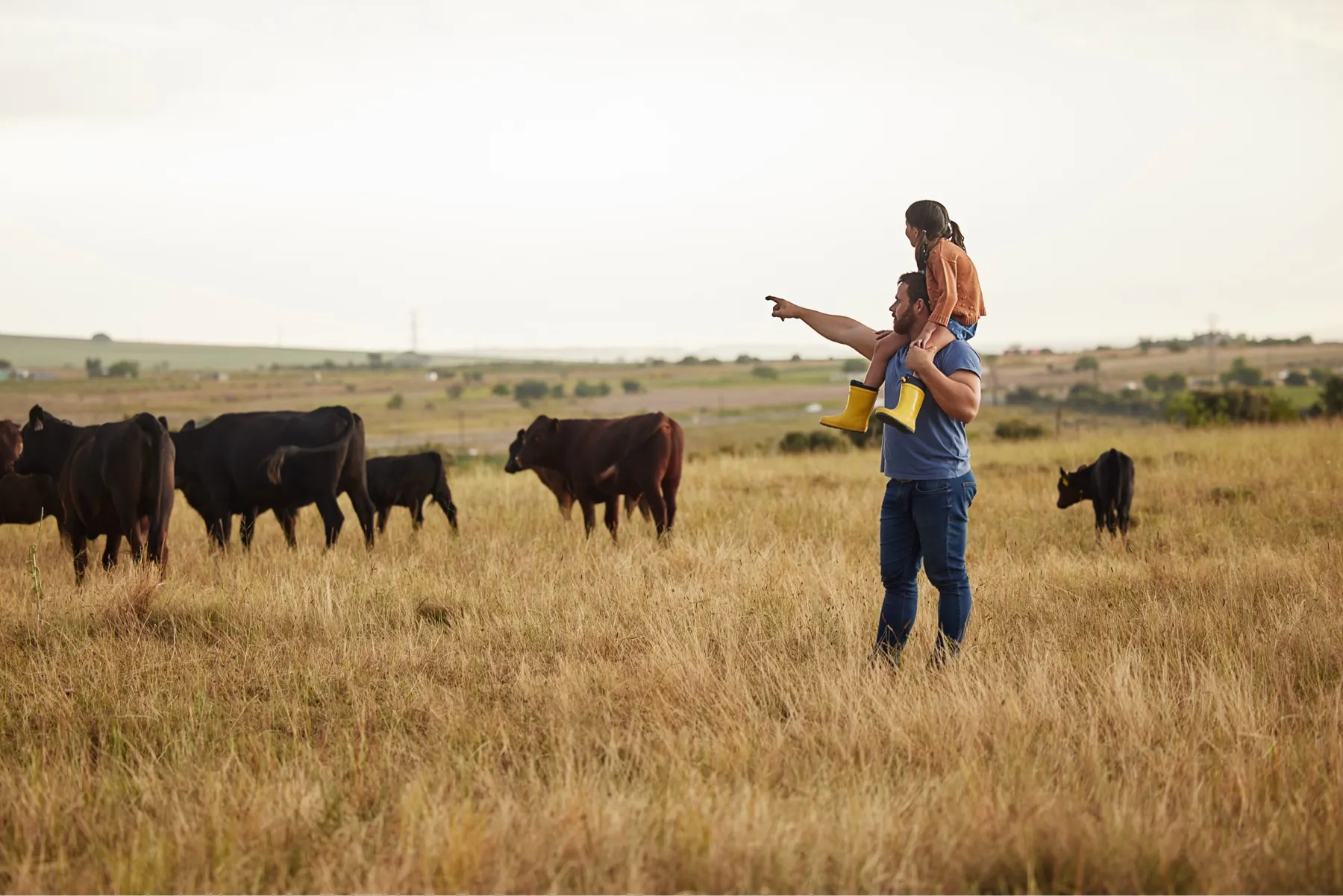
Source: Adobe Stock
Agriculture, health, and sustainability circles are abuzz this week following news that President Trump is authorizing the import of 300,000 metric tons of ground beef from a yet-undisclosed source to be sold at 25% below the current U.S. market price [1]. Trump’s stated goal is to lower grocery prices and expand U.S. cattle production. Ground beef prices in the U.S. are up over 50% in the past five years. In the past 8 months, prices have risen from $5.50 to $6.89 per pound on average (a 25% increase). Further, the number of farms producing cattle in the U.S. decreased by 17% from 2017 to 2022 [2]. This year, the cumulative U.S. cattle herd is the smallest it’s been since 1951 [3].
Despite Trump’s goals, cattle producers in West Virginia, Iowa, Minnesota, Colorado, and the Gulf Coast, as well as several national livestock groups, argue that while Trump’s plan for cheap imports may lower prices for consumers in the short-term, the consequently lowered demand for U.S. beef will undermine the long-term domestic market by making it difficult for ranchers to justify expanding their herds.
Some environmental advocates may cheer the decline of the beef industry, due to longstanding narratives that the beef industry is an outsized driver of climate change. Could this seemingly rash Presidential Proclamation be a rare example of climate-forward policy from this administration? Is the consequent doom facing American cattle ranchers a blessing in disguise for stateside sustainability proponents? The reality of a future where sustainable agriculture fuels the nation and the policy it will take to get there is not so black and white.
The science of sustainable cattle farming
The view of cattle production as an innate major driver of climate change stems from an amalgamation of reports quantifying the global methane emissions from agriculture writ large [4,5] and the popularity of the straightforward explanation that a majority of these emissions come from cow burps. Methane is an extremely potent, yet relatively short-lived, greenhouse gas, and cattle do naturally produce more of it because of how they digest their food [6]. Estimates of exactly what portion of global methane emissions are produced by cattle specifically vary widely by scientific approach and metric, [5,7] and there is no clear consensus on which methodologies are most accurate or relevant for policymaking. As one example, several widely cited reports utilize Intergovernmental Panel on Climate Change (IPCC) Tier 1 methodologies, which use simple multiplication to estimate emissions metrics from country-level production data and standardized emissions factors for each sector. While useful for gathering a bird’s-eye view of emissions for global reports, these estimates are not appropriate for informing domestic agricultural policy decisions and advocacy efforts. Standardized global metrics can underestimate emissions for intensive industrial cattle farming operations and overestimate emissions for industry sectors using more mindful approaches, like regenerative grazing.
What is clear, and most relevant for policymaking, is that farming practices can vastly influence emissions and holistic sustainability. Several feed additives including seaweed1 have been shown to decrease methane production, in some cases dramatically, and at relatively low cost [8]. However, only around 16% of beef cattle in the U.S. are raised on supplied grain feed in feedlots, [9] so daily nutritional supplements are not practical for the majority of cattle producers who graze their livestock on pastureland.
Further, methane emissions are just one piece of the sustainability puzzle when it comes to farming cattle. Feedlot operations, even when methane-reducing additives are on the menu, can entail significant carbon emissions via consumption of fossil fuels for transporting feed, electricity, and diesel [10]. Rangeland grazing operations may also negatively affect biodiversity and erode topsoil, effectively eliminating unquantifiable ecosystem services like carbon sequestration2 and foundational habitats [11,12]. But not all grazing operations are built equally.
Despite the media hype around flashy practices like feeding cattle seaweed, a quieter, more ambitious and holistically-minded movement is building under the banner of groups focused on regenerative agriculture, like the Carbon Cowboys. They advocate for an approach known as mob grazing, or as the carbon cowboys call it, adaptive multi-paddock (AMP) grazing that mimics the ecology of the huge Great Plains bison herds of yore. This approach entails frequently rotating cattle across multiple smaller paddocks, allowing the pastureland time to recover between grazing periods and take advantage of fresh deposits of cow pies. AMP grazing stimulates plant and microbial growth, which allows the pastureland soil to sequester atmospheric carbon including greenhouse gases and soluble nitrogen, [13] which is not only crucial for climate change mitigation, but also for supporting grassland ecosystems [14,15]. Furthermore, a greater diversity of native plants for cattle to graze can also decrease methane production during enteric fermentation [16]. Ample research has shown that implementation of AMP grazing provides vital ecosystem services that attract more breeding bird species and cultivate the conditions necessary for higher arthropod diversity and population health, including bees and other pollinators [17 — 19].
Sustainable agriculture is about much more than greenhouse gas emissions: ecosystem services put the “s” in sustainability when it comes to agriculture. Truly sustainable practices like AMP grazing allow an agricultural system to flourish within native ecosystems with little to no chemical or material supplementation.
But with farmers’ costs rising and many hanging up their hats, what do farmers need to implement these strategies? How can policy come into play in getting new farmers into ag and implementing sustainable practices?
The role of corporate consolidation & political betrayals
Contrary to what many consumers may believe, the unfortunate reality is that many of America’s cattle ranchers and other farmers raising livestock for meat processing or dairy do not have control over their practices in a meaningful way. In the beef industry, the top four processing companies — JBS, Cargill, Tyson Foods, and National Beef — control 82% of cattle purchases [20]. Across the beef, pork, and poultry industry, a handful of companies control the market and do so by implementing a contract farming model: farmers purchase baby animals and feed from the company, raise them, and then sell them back to the same company who has already agreed to purchase them, though at a price they are often liable to change later. [21] The company can also mandate certain rearing practices that can pose huge financial burdens on farmers and prohibit them from trying out more sustainable practices. These companies implement predatory and abusive practices that pin farmers against each other, deliver sub-par feed and animals to farmers who have gotten on their bad side by speaking out or otherwise, and ultimately reduce independent farmers to at-will employees exempt from the protection of labor laws who also finance their corporate overlords [21,22].
Farmers used to be able to negotiate prices in thriving local butcher markets, but the past forty years of unchecked consolidation and incorporation frequently leave today’s farmers with no alternative that services their area. From a policy standpoint, the real shift that spelled the demise of agriculture as an approachable, modestly profitable industry for farmers was a drastic change in the interpretation of antitrust laws by economists in the Reagan administration. Their policy essentially revised the scope and intent of antitrust laws from preventing monopolies and protecting competition to ensuring “efficiency” and access for consumers, a view that was soon adopted by both sides of the aisle in Congress and the Supreme Court [23]. Essentially, as long as grocery store prices were cheap, processing companies could achieve that however they wanted. This, along with the weakening of the Packers and Stockyards Act3, was disastrous for farmers.
There have been moments of hope, largely quelled by the strength of corporate lobbying in light of the legacy of the Reagan-era antitrust revisions. After campaigning on bringing relief to farmers—a political move that may have won him the presidency—Obama’s Department of Agriculture (USDA) held a series of hearings around the country in 2010 for farmers suffering or choked out by monopolies, staffed with trusted agricultural experts. Farmers and ranchers came out in droves, because for the first time in a generation, the highest echelons of the federal government were coming to listen to them. [25] They risked their contracts with meatpackers by showing up and speaking out. The series of proposed rule changes under the Packers and Stockyards Act informed by the hearings that were soon released by the USDA gave farmers their first taste of relief in decades. [21]
However, meatpackers and their favored congresspeople had other plans. Over the next two years, the proposed rules from Obama’s USDA were effectively killed by political maneuvering and demands for further reports of economic impact (eventually authored by meat lobbies). Both Republican and Democratic Representatives argued the rules, set to support independent farmers, failed to consider industry interests. [26] The coffin was hammered shut when the House Appropriations Committee passed a rider that stripped the USDA of the funds it would need to enforce any rule changes. A swing toward the Tea Party in the 2010 midterm elections and the subsequent shakeup in the Obama administration to cater to more centrist interests meant that the White House was absent. The USDA retreated, and the farmers and their advocates were left high and dry [21].
More recently, additional attempts to inject life into the farmer protections guaranteed by the Packers and Stockyards Act under President Biden were rescinded in July by the Trump administration. [27] Last year, Trump’s Department of Justice announced a plan to investigate the “Big Four” meatpacking companies that control most of the beef processing in the U.S.; though, a similar investigation with the same target was also announced in 2020 during Trump’s first term that proved fruitless [28]. Just last week, Trump announced forthcoming “legal documents” that would allow ranchers and farmers to process their own animals, promising more details on Monday, September 7th [29]. At the time of publication, no further details have been released. It is not clear whether he has the authority to make these changes, which existing regulations this action would target, or under which laws new rules may be applied.
The fight to move toward a sustainable future
As of today, the abuses of meatpackers remain uncontested in any meaningful way by the federal government. American farmers are still beholden to meatpacking companies and their practices to remain operational, unable to experiment with more sustainable solutions. Finally, consumers are feeling the rising costs farmers have been facing for decades. Imported beef is now proposed as a bandaid for grocery shoppers’ wallets ahead of the midterms alongside an ambiguous proposal for in-house processing for which many farmers may not have the resources. There is one silver lining, though unexpected: a possible shift toward buying local.
Skeeved by the lettuce-associated cyclospora outbreak, a national recall of a major suppliers’ eggs, and now the conspiracy theories surrounding an influx of foreign beef imports, younger consumers are, at least in their online banter, looking local. There are now over 750,000 users on the app Localize, which promises to connect users with local farmers and farmers’ markets. This trend is reminiscent of the golden days of farming when the Packers and Stockyards Act had all its teeth, and farmers were selling local, and consumers were buying local. The small farms that are geared toward local distribution are subject to the higher volatility of a local market but are also more likely to have the freedom to implement sustainable, regenerative farming practices. Perhaps a shift in consumer behavior toward buying directly from local farms could precipitate some much-needed relief for small farms, until this or a future Congress and USDA find the courage to support U.S. farmers and ranchers and a sustainable future instead of corporations.
Advocating for farmers’ interest is advocating for sustainability. We have the science to make cattle farming sustainable. Current policy approaches only reinforce the barriers in place that keep the interests of farmers and a sustainable future, though often aligned, from marrying. In order to move forward, farmers need to be at the center of the conversation. Cheap imports won’t solve our problems, but listening to and addressing the plight of American farmers through thoughtful and courageous policy approaches will. Fighting for their freedom to implement sustainable practices and sell to a free market will.
In the meantime, support your local farmers!
Recognition:
Emma Scales is a fungal biologist and PhD candidate at Cornell University with a background in technical and journalistic writing and a passion for science communication who also serves as co-President of Cornell Advancing Science and Policy Club.
Special thanks to the following SNAP members who provided feedback on this blog:
David Ramotowski is currently serving as a West Virginia Science and Technology Science Policy Fellow after earning his PhD in Civil & Environmental Engineering at the University of Iowa.
Andrew Ramirez is an adjunct professor at The College of New Jersey and Middlesex College. He received his PhD from UCLA developing machine learning models to analyze multi-sample single-cell gene expression data.
Edith-Marie Green is a PhD Candidate in Population Health Sciences at the University of Wisconsin-Madison. Her research broadly focuses on aging and end-of-life healthcare, as well as global health and the rural-urban continuum.
Emily Selland is an ecologist and public health scientist whose research focuses on sustainable and economically viable innovations for infectious disease control.
Footnotes:
- The research so far identifies halogen-containing feeds like certain types of seaweed and plants, lipids or fatty acids like coconut oil, 3-nitroxypropanol (3NOP), nitrates, and others as feed supplements that reduce belching [8].
- Carbon sequestration is a biological process where through their photosynthesis, growth, and eventual decay, living things remove carbon, including greenhouse gases, from the atmosphere and store it in more permanent forms in the soil. Carbon sequestration is greatest when plants and microbes are actively growing, like after a cow steps grass and leaves it to recover. Without topsoil, which can be depleted by grazing cattle on the same land for longer periods of time, the grass and its associated microbes can’t grow back.
- As detailed in Washington Monthly, farmers also previously had the specific protection of the Packers and Stockyards Act, also referred to as the “Farmer and Rancher Bill of Rights”, which outlawed meatpackers paying farmers less than market price for their livestock or advantaging some farmers over others. As the scope of this law began to clash with that of antitrust rules, the courts’ new enforcement pattern of the broader antitrust laws took precedence. The Packers and Stockyards Act became toothless, further weakened in the 21st century by a quiet but total halt in enforcement by the Bush USDA [24].
References:
- Ryan Hanrahan. Cattle Groups Protest as Trump Signs Beef Import Plan. Farm Policy News Univ Ill Urbana-Champaign. Published online August 27, 2026. https://farmpolicynews.illinois.edu/2026/08/cattle-groups-protest-as-trump-signs-beef-import-plan/
- Cattle Production. USDA. https://www.nass.usda.gov/Publications/Highlights/2024/Census22_HL_Cattle%20and%20Cattle%20on%20Feed_final.pdf
- Joe Hernandez. Why the U.S. cattle herd is at a 75-year low—and what it means for beef prices. NPR. Published online May 29, 2026. https://www.npr.org/2026/05/29/nx-s1-5719511/beef-cattle-herd-food-prices
- United Nations Environment Programme, Climate and Clean Air Coalition. Global Methane Assessment: 2030 Baseline Report. United Nations; 2022. https://wedocs.unep.org/handle/20.500.11822/41107
- Saunois M, Martinez A, Poulter B, et al. Global Methane Budget 2000—2020. Earth Syst Sci Data. 2025;17(5):1873–1958. doi:10.5194/essd-17-1873-2025
- Livestock and enteric methane. Food and Agriculture Organization of the United Nations—Resources. https://www.fao.org/in-action/enteric-methane/background/en/
- Alem BB, Chen B, Zhang H, Iqbal U. Comparative Review of Global Methane Budget Estimation: Top-Down, Bottom-Up, and Integrated Approaches. Remote Sens. 2026;18(9):1336. doi:10.3390/rs18091336
- Honan M, Feng X, Tricarico JM, Kebreab E. Feed additives as a strategic approach to reduce enteric methane production in cattle: modes of action, effectiveness and safety. Anim Prod Sci. 2022;62(14):1303–1317. doi:10.1071/AN20295
- Cattle. USDA; 2026.
- Rotz CA, Asem-Hiablie S, Place S, Thoma G. Environmental footprints of beef cattle production in the United States. Agric Syst. 2019;169:1–13. doi:10.1016/j.agsy.2018.11.005
- Donovan M, Monaghan R. Impacts of grazing on ground cover, soil physical properties and soil loss via surface erosion: A novel geospatial modelling approach. J Environ Manage. 2021;287:112206. doi:10.1016/j.jenvman.2021.112206
- Filazzola A, Brown C, Dettlaff MA, et al. The effects of livestock grazing on biodiversity are multi-trophic: a meta-analysis. Seabloom E, ed. Ecol Lett. 2020;23(8):1298–1309. doi:10.1111/ele.13527
- Mosier S, Apfelbaum S, Byck P, et al. Adaptive multi-paddock grazing enhances soil carbon and nitrogen stocks and stabilization through mineral association in southeastern U.S. grazing lands. J Environ Manage. 2021;288:112409. doi:10.1016/j.jenvman.2021.112409
- Johnson DC, Teague R, Apfelbaum S, Thompson R, Byck P. Adaptive multi-paddock grazing management’s influence on soil food web community structure for: increasing pasture forage production, soil organic carbon, and reducing soil respiration rates in southeastern USA ranches. PeerJ. 2022;10:e13750. doi:10.7717/peerj.13750
- Apfelbaum SI, Thompson R, Wang F, Mosier S, Teague R, Byck P. Vegetation, water infiltration, and soil carbon response to Adaptive Multi-Paddock and Conventional grazing in Southeastern USA ranches. J Environ Manage. 2022;308:114576. doi:10.1016/j.jenvman.2022.114576
- Badgery W, Li G, Simmons A, et al. Reducing enteric methane of ruminants in Australian grazing systems—a review of the role for temperate legumes and herbs. Cullen B, ed. Crop Pasture Sci. 2023;74(8):661–679. doi:10.1071/CP22299
- Schmid RB, Welch KD, Teague R, Lundgren JG. Adaptive Multipaddock (AMP) Pasture Management Increases Arthropod Community Guild Diversity Without Increasing Pests. Rangel Ecol Manag. 2024;94:141–148. doi:10.1016/j.rama.2024.03.001
- McGraw MJ, Apfelbaum SI, Thompson R, et al. Breeding bird response to adaptive multi-paddock and continuous grazing practices in Southeastern United States. Ecosphere. 2024;15(12):e70107. doi:10.1002/ecs2.70107
- Busenitz KM, Schmid RB, Lundgren JG. Regenerative rangeland management improves honey bee health and productivity. Front Sustain Food Syst. 2025;9:1555238. doi:10.3389/fsufs.2025.1555238
- James M. MacDonald. Concentration in U.S. Meatpacking Industry and How It Affects Competition and Cattle Prices. Amber Waves USDA-ERS. Published online January 25, 2024. https://www.ers.usda.gov/amber-waves/2024/january/concentration-in-u-s-meatpacking-industry-and-how-it-affects-competition-and-cattle-prices
- Lina Kahn. Obama’s Game of Chicken. Wash Mon. Published online November 9, 2012. http://washingtonmonthly.com/2012/11/09/obamas-game-of-chicken/
- Yanasa TV News. Meatpacking Monopolies: How Big Meat Is Bankrupting America’s Small Ranchers. Yanasa News. July 27, 2025. https://yanasanews.com/news/meatpacking-monopolies-how-big-meat-is-bankrupting-americas-small-ranchers/
- Brian Cheffins. The Rise, Survival, and Potential Fall of the Reagan-Era Antitrust Consensus. Promarket. Published online March 13, 2022. https://www.promarket.org/2022/03/13/the-rise-survival-and-potential-fall-of-the-reagan-era-antitrust-consensus/
- USDA IG Finds Fault with Enforcement of Packers & Stockyards Act.. (n.d.). USDA; 2014. https://www.thefreelibrary.com/USDA+IG+finds+fault+with+enforcement+of+packers+%26+stockyards+act.-a0141343908
- Melanie Warner. Why Big Chicken May Be Obama’s Next Antitrust Target. CBS News. May 25, 2010. https://www.cbsnews.com/news/why-big-chicken-may-be-obamas-next-antitrust-target/
- Ohio Ag Net. Ag Panel Concerned With What They Heard. Ohios Ctry J. July 21, 2010. https://ocj.com/2010/07/ag-panel-concerned-with-what-they-heard/
- Phoebe Trotter. Trump USDA To Rescind Meat Sector Competition Rules. Food and Water Watch. July 6, 2026. https://www.foodandwaterwatch.org/2026/07/06/trump-usda-to-rescind-meat-sector-competition-rules/
- Angela Huffman, Joe Maxwell. Trump’s DOJ Meatpacker Investigation Explained—and What Must Happen Next. Farm Action. https://farmaction.us/trumps-doj-meatpacker-investigation-explained-and-what-must-happen-next/
- Courtney Subramanian, Bloomberg News. Trump eyes changes in farm regs. Hartford Courant. August 31, 2026. https://www.courant.com/2026/08/31/trump-eyes-changes-in-farm-regs-2/