Member SNAPshot: September 2026
Our Member SNAPshot series shines a spotlight on the early-career researchers who make up the Scientist Network for Advancing Policy. Each post highlights the breadth of science or technology research, policy, and advocacy work our members are engaged in both within and outside of SNAP. We look forward to featuring these snapshots regularly to celebrate our community.
Member: Olivia Asher, PhD
Currently based in NY
How did you first become involved in science policy and SNAP?
I got involved in science policy in January of 2025 after I realized that a career in research was not a viable option for me due to the national environment and my personal strengths and interests. I started out by going to Environmental Justice Day at the Georgia State Capitol with Science for Georgia. That year, I was the only Athens resident to attend. By the next year, I built up the science policy community in Athens and brought ten people with me to EJ day! I learned about SNAP in August 2025 from David Ramotowski. David and I both took the Science Diplomacy course from NSPN together and after the course ended he sent me a message asking if I would be interested in joining. Instantly, I was in and I got the Coalition of Athens Scientists, the local policy group I worked with in Georgia, to engage with SNAP as well.
Tell us about your research!
For my PhD I studied fungi that live in 80% of plant roots and help plants get nutrients from the soil more easily! My research helped add to the available data on bacteria that associate with these important fungi.
What are you involved with in SNAP?
I am involved with Stance on Science in Georgia. I hosted and served on the organizing committee for the Spring 2026 Athens Candidate Forum on Energy and the Environment and am currently helping coordinate similar forums in Athens and Valdosta Georgia next month! I also try and jump in on tasks like doing the newsletter when I can. I love reading slack messages and sending messages so trust I will be in on that.
Share a picture of you doing science policy and tell us about it.
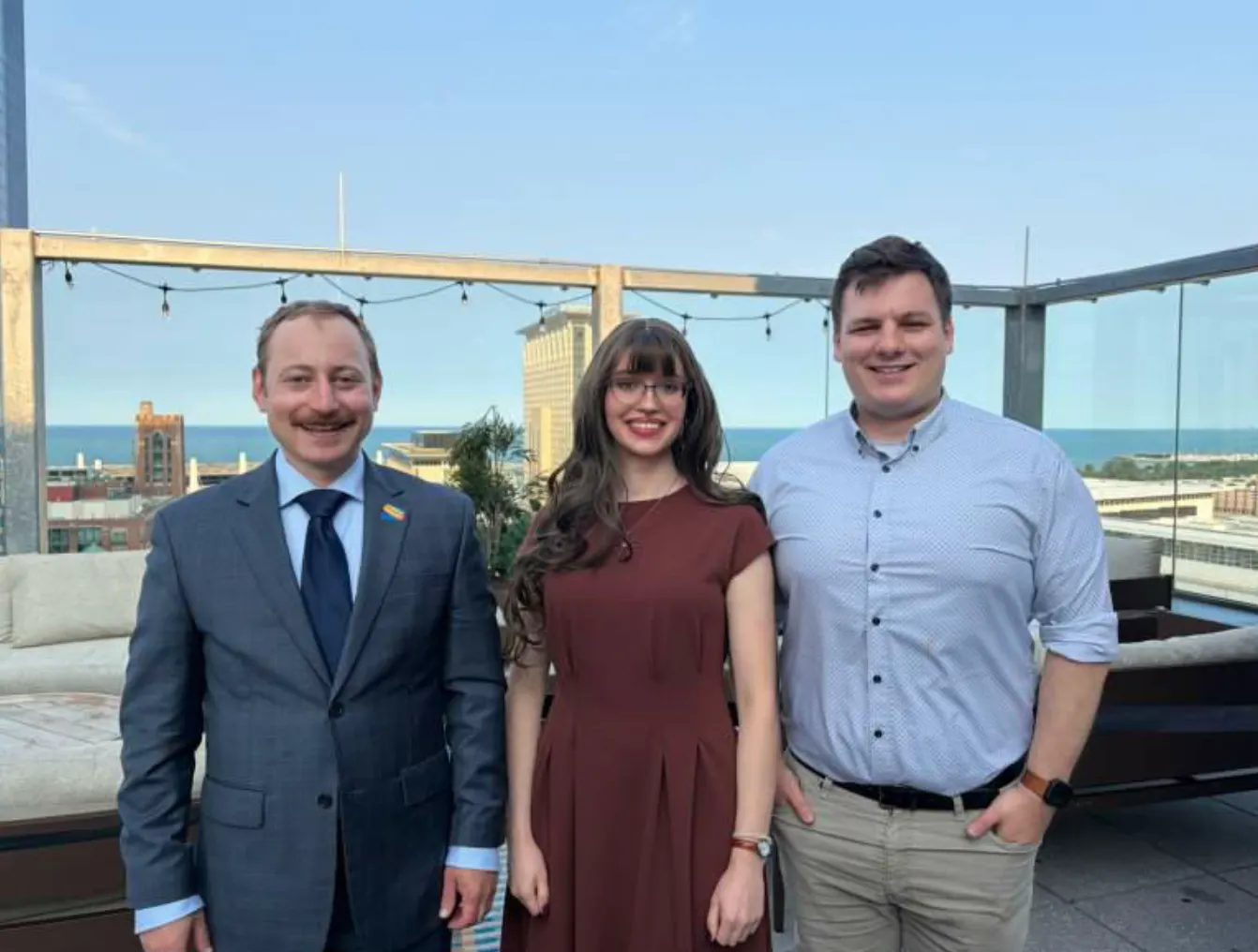
Me with fellow SNAPpers David and Brendon at the National Conference of State Legislatures in Chicago.
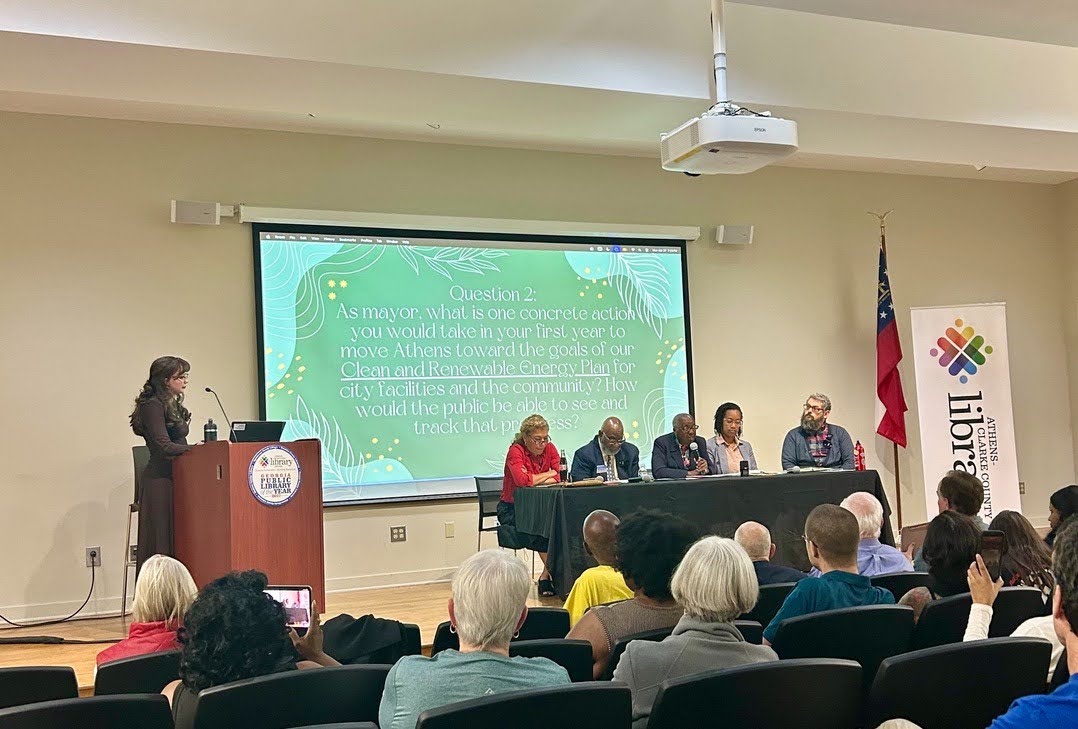
Me moderating the Spring 2026 Athens Candidate Forum on Energy and the Environment.
What’s a fun fact everyone should know about you?
My favorite turtle is the stinkpot musk turtle. I love these creatures so much I wrote an article about them.
Are there any people who inspire you in science or science policy?
I am inspired by fellow organizers I have been privileged to work with in Georgia, especially Dr. Treva Gear, Laura Iyer, Dr. Tawana Mattox, Louis Gordon, Gayle Chimo, Tim Johnson, Concerned Citizens of Cook County, Science for Georgia, Coalition of Athens Scientists, and of course SNAP!
Member: Brandon Emanuel León
University of Miami
How did you first become involved in science policy?
I got my start in science policy after attending a postdoc career panel. One of the speakers was a former AAAS Science & Technology Fellow and continues to work in science policy. He talked about the different skills involved, especially science communication with non-scientists which is something I am very passionate about. I was also drawn to the fact that science policy allows you to shape the impact of scientific discoveries beyond the lab and into society. While scientific and technological innovations come with many exciting benefits, it is also important to manage the costs and ensure those benefits are seen by all the relevant stakeholders. I am also from Northern Virginia (NOVA). I want to come back and live near my family and friends, and luckily many science policy jobs are located in the DMV. All of these factors lined up during that career panel and I knew that science policy was the direction I wanted to pursue after graduating.
Tell us about your research!
The focus of my research is glioblastoma (GBM), a primary brain cancer that exhibits poor clinical outcomes. Patients survive an average of 12–15 months after diagnosis and the standard course of treatment hasn’t changed in 21 years, so I am seeking to discover new therapeutic targets to improve patient survival.
Specifically, I am studying the interactions between GBM cells and astrocytes in the vicinity of the tumor. Astrocytes are the most numerous type of brain cell and carry out several essential functions. They control what enters the brain, fuel neurons with energy, coordinate immune responses during infection or injury, and regulate levels of neurotransmitters. Interestingly, GBM cells reprogram astrocytes to increase their ability to grow and survive treatments like radiation and chemotherapy, but it is not entirely known how GBM cells do this.
We know cancer cells release massive amounts of glutamate, a neurotransmitter, and that glutamate acts like a spark to fuel cancer cell growth. However, it isn’t known whether GBM cell-derived glutamate reprograms astrocytes. Astrocytes have a number of glutamate transporters, receptors, and metabolic enzymes positioning them as a potential hub of glutamate dysregulation in glioblastoma. So far, I found that cancer cells that release higher levels of glutamate potently reprogram astrocytes. Additionally, astrocytes increase cancer cells growth when stimulated by glutamate or high glutamate-producing cancer cells. Currently, I am working on uncovering how glutamate reprograms astrocytes with these pro-tumorgenic functions to hopefully find a new treatment target to improve patient outcomes.
What are you involved with in SNAP?
One recent initiative I am involved in is SNAP Visits. I had participated in a number of visits, but these were special. I brought along two students who were new to advocacy. We met and discussed their research and how their projects could address the issues facing Miami and Florida. Marla Marquez is a PhD candidate and our student government president and studies the shared mechanisms of synaptic degradation in Alzheimer’s disease (AD) and traumatic brain disorder (TBI). Understanding and reversing this mechanism could yield new treatments for dementia for Florida’s aging population. Gwen Pieklo is also a PhD candidate and studies how HIV and methamphetamine abuse changes the gut microbiome and negatively affects cognitive functions in patients. Miami exhibits one of the highest incidences of HIV infections in the country. The gut microbiome and the brain share a surprising connection and reversing the maladaptive changes induced by HIV and methamphetamine could improve deficits in cognition for patients. The NIH funds all of our research, and facing budget cuts, Marla, Gwen, and I framed NIH funding as a way to address issues that affect Miamians and Floridians.
Share a picture of you doing science/something you are passionate about, and tell us about it.
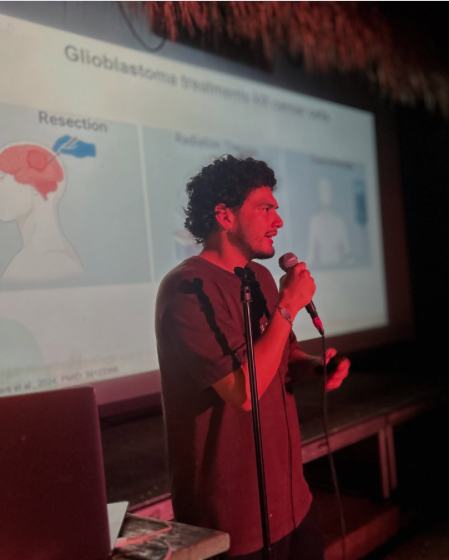
Speaking at Miami NerdNite
This is me speaking at a Miami NerdNite hosted at the famous Gramps bar in Wynwood. It was a wonderful experience talking with Miamians about cancer-neuroscience, a topic I am particularly passionate about. After the presentation, I had some drinks with new people and connected over scientific topics, and it was great fostering those relationships with community members.
What’s a fun fact everyone should know about you?
I used to DJ in high school and college. I used to DJ in bars, clubs, and even a rented out gymnastics gym. The gym had a bouncy floor so you can imagine how dancing was!
What’s your favorite science memory?
My first poster session. I was presenting some research from my undergrad lab at a workshop at the Janelia Farms Research Campus. I learned a lot talking with postdocs and grad students about what science was like and their experiences. They had wine and food which was also a plus.
Member: Emily Selland, PhD
University of Notre Dame; based in Colorado
How did you first become involved in SNAP?
I joined SNAP during its establishment days, as I was a co-President of Notre Dame’s Science Policy Initiative (SPI) at the time, back in early 2025! It was a pretty perfect transition for me — I was loving what SPI had been able to achieve in the South Bend/Mishawaka region and Indiana more broadly in collaboration with other awesome Indiana graduate groups. But my time as co-President was almost done, and I was moving to a new state (Colorado). SNAP was the perfect opportunity for me to do and learn more, and to connect my Indiana science policy background to a nationwide perspective. I started my PhD not even knowing what science policy was, so I had a large learning curve through SPI. SNAP helped fill additional gaps both of knowledge and experience, allowing me to really grow with a supportive network of remarkable people (who are now wonderful friends!) from across the country. (I love SNAP, can you tell?!)
Tell us about your research!
I study an infectious parasitic disease called schistosomiasis. It is spread through snails in freshwater and is quite devastating, especially in rural and agricultural communities across the globe. In my research, I investigate how we can use environmentally based interventions to reduce the transmission of this parasite to people, protect ecosystems, and boost the sustainable development of communities. I take what’s called a Planetary Health approach to disease control in the contexts I work in — we aren’t just focused on the disease, but we think about the systemic drivers that perpetuate parasite transmission in these communities, including sustainability, agricultural systems, and socioeconomics! I use many different tools to do the work I do, including fieldwork, laboratory experiments, sociological surveys, and mathematical modeling.
I love my research, half because it is solutions-oriented and half because I get to work with incredible people and diverse teams to make it happen. Some of the research into Rice-Fish Co-Culturing for parasite control, which I led pilot studies on, continuously adds more collaborators and research questions across disciplines, which has been so exciting to be a part of. The project has huge potential, which was recently highlighted in NPR, Climate Gendered, and Agence France-Presse (French version), and I feel really proud to be part of a group pushing the envelope to take on grand challenges in global health from a system-wide lens.
What are you involved with in SNAP?
Being involved in SNAP for so long, I’ve gotten to help with a bunch of different initiatives, writing pieces, speaking engagements and conferences, recruitment, and more! Currently, I’m leading the Colorado team for Stance on Science as I’m living in Denver, CO, helping develop SNAP’s science policy open-source curricula, doing strategic social media and communications, and ensuring our SNAPpers have everything they need to write and post their blogs (like this one in Science Policy in a SNAP)!
Share a picture of you doing science/something you are passionate about, and tell us about it.
My second love in the science-impact space, along with science policy, is science communication! This is a photo of me speaking at Nerd Nite Denver. I’ve done a few speaking engagements to communities and classes, but Nerd Nite was a challenge because I didn’t have to just be engaging and interesting; I also had to be FUNNY!
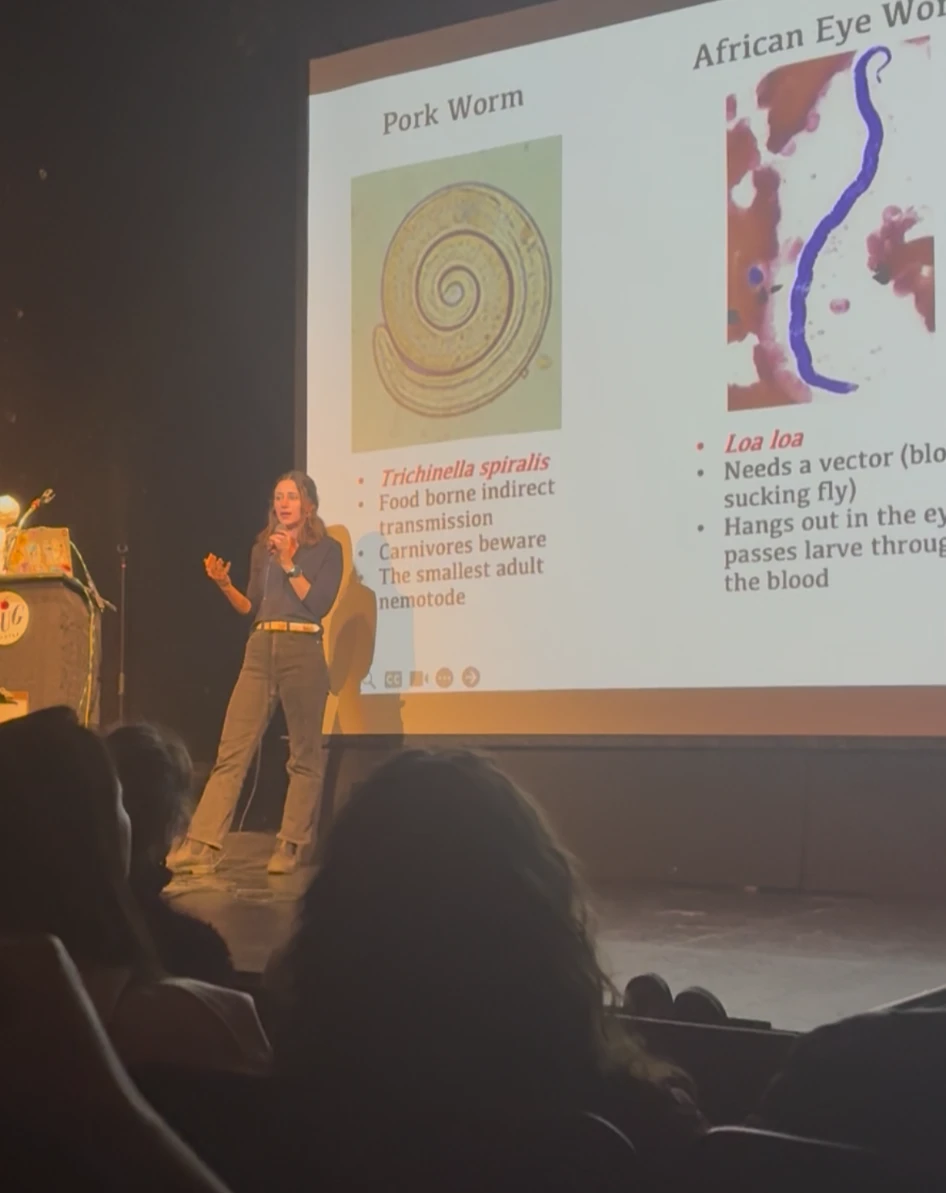
Speaking at Nerd Nite Denver
I’m not sure I have a future as a stand-up comedian, but I definitely had a lot of fun pushing myself. I even got a few laughs out of the audience while teaching them about the weird and wacky world of parasites. I love the use of comedy to break down barriers between scientists and communities, and I hopefully will be able to find more opportunities to practice using it soon.
What’s your favorite science memory?
My favorite memory might actually be from some of my undergraduate research. I was in Argentina looking at plant diversity in response to a new rotational grazing scheme of sheep (and also just learning about science, field research, and ecology in general). I’d get dropped off in the field and, for multiple hours, be out alone, making quadrants, IDing plants, and admiring the occasional guanaco (and sheep) who would wander up. That whole trip taught me so much and helped build my confidence in myself as a scientist. Doubly wonderful, I was in a beautiful place and able to practice some photography, saw wildlife and ecosystems I’d otherwise never experience, and made remarkable friends who share similar interests and values.
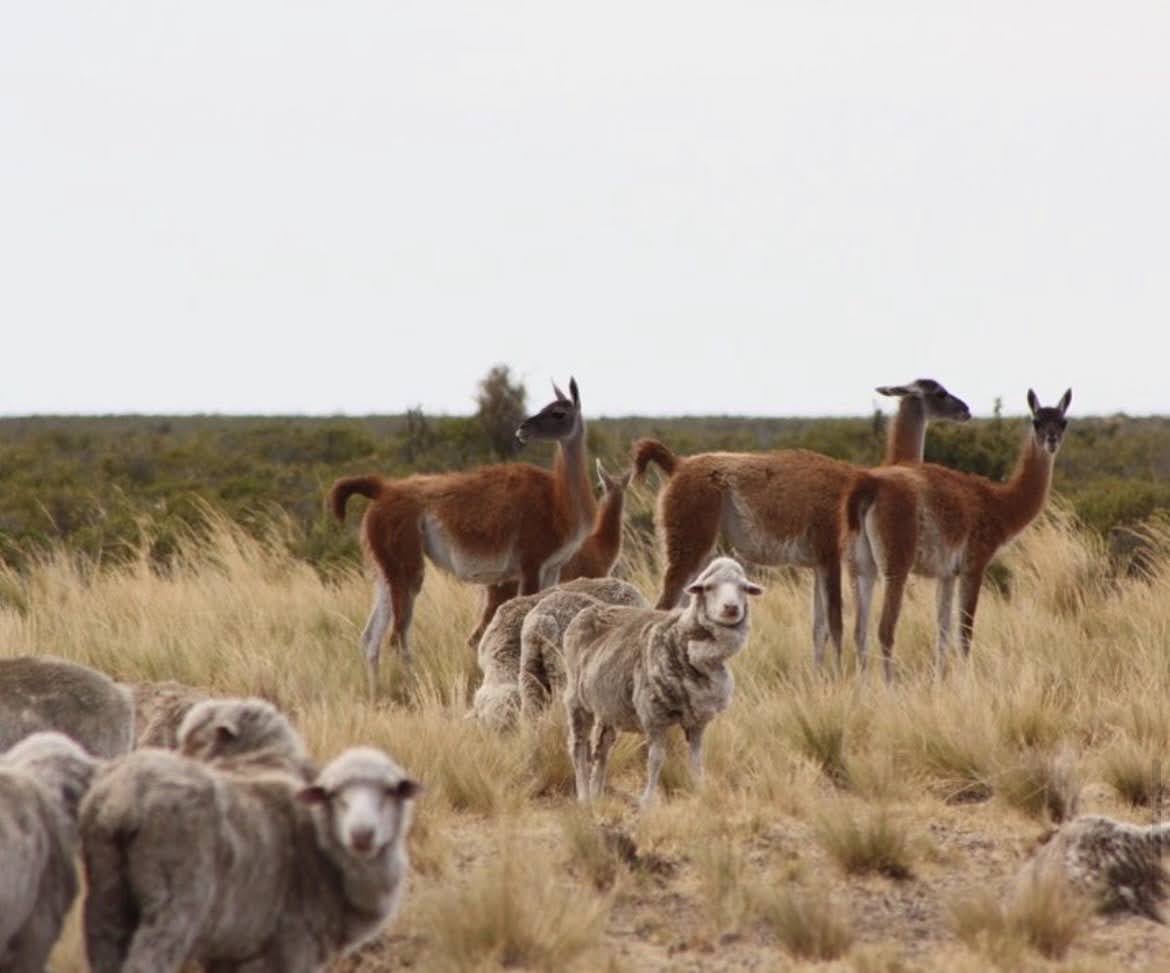
Photo I took in the field of the sheep and guanacos jointly grazing in the Patagonian Steppe ecosystem.
Explain your research using emojis only.
🐌🤛🐟=🌾🧑🌾
If someone asked your siblings what you study, what would they say?
I just defended my PhD in August, and my siblings watched, so I think they’d be able to squeeze out a little something about infectious diseases and environmental control mechanisms! But the simple response most of my family usually gives about my work is “snails and fish and computer modeling.”
Not wrong!
Recognition:
Thanks to Brandon, Olivia, and Emily for their responses! This article was edited by Isako Di Tomassi.