Back to map

Oklahoma

Created by the Oklahoma Stance on Science team. Please contact stanceonscience.OK@gmail.com with any questions.

Last updated: September 3, 2026

Jump to candidate responses

Oklahoma will face many challenges in the coming years, and it is increasingly critical that our policymakers understand the importance of evidence-based decision-making. The goals of this resource are to:

  1. Provide voters with clear, accessible information so they can see how candidates value science in decision-making.
  2. Hold candidates accountable by sharing their responses publicly on our website and via local media.
  3. Encourage thoughtful engagement between communities and policymakers on science policy-related topics in our state.

Through Stance on Science, we hope to help Oklahomans understand how their elected representatives will utilize science to improve the state that they love. Learn more about this initiative on the home page.

How to use this resource

This webpage houses the responses to 8 questions crafted by the Oklahoma Stance on Science team.

Only official candidates who will appear on ballots were contacted.

Candidates were contacted in August 2026 (with a follow-up to those who did not initially respond) and given the opportunity to answer the questions selected for their race. Only the responses of candidates who answered the questions are included. None of the candidates' responses were modified in any way before being published on this resource page.

For the November 2026 General Election, only candidates in the following elections were contacted:

US Senate
  • Republican, Democratic, Libertarian, Independent
US House of Representatives
  • Democratic, Republican and Independent candidates in Districts 1, 2, 3, 4, and 5
Oklahoma State Senate
  • Democratic and Republican candidates of Districts 2, 4, 6, 8, 10, 12, 17, 18, 22, 24, 26, 28, 32, 34, 36, 38, and 42
Attorney General
  • Democratic, Republican
Unopposed incumbents were not contacted, since they face no opponent in November and have already secured their seats by default.
The questions posed
  1. Oklahoma’s public research universities contribute substantially to the state’s research capacity, innovation economy, and workforce development. The University of Oklahoma alone reported more than $400 million in research and development expenditures across its three campuses in fiscal year 2022. NIH grants reimburse institutions for both direct research costs and indirect costs, the facilities, administration, and support infrastructure that make research possible. A proposed federal policy change would cap NIH reimbursement for indirect costs at 15%, below the rates many institutions currently receive. What policies, if any, would you support at the state or federal level to protect the long-term stability of Oklahoma’s university research infrastructure, and why? (see "Investment in Higher Education" and "Science Funding")
  2. Tribal nations play an important role in Oklahoma’s environmental stewardship, but many face challenges in accessing resources and infrastructure for environmental science, land management, and water monitoring. What policies, if any, would you support to strengthen tribal capacity in these areas, and why? (see "Environment" and "Policymaking Process")
  3. Oklahoma’s agricultural economy depends on reliable access to water, but competing demands among agricultural producers, rural communities, and growing industries have created challenges for managing the state’s water resources. Recent legislation has updated groundwater reporting requirements, enforcement mechanisms, and requirements for certain data center cooling systems while protecting permitted users who reduce water use through conservation. How effective do you believe current policies are in protecting Oklahoma’s water resources? What additional policies, if any, would you support to balance the needs of agricultural producers, rural communities, and economic development? (see "Agriculture")
  4. The Oklahoma Corporation Commission lists nearly 17,000 wells on its official Orphan Well List. In 2026, legislation was introduced in Oklahoma to allow abandoned oil and gas wells to be repurposed for geothermal energy or energy storage. What policies, if any, would you support to address the remediation of Oklahoma’s orphaned oil and gas wells, including opportunities to safely repurpose suitable wells? (see "Energy" and "Environment")
  5. Oklahoma is home to nationally recognized severe weather research and forecasting facilities based in Norman, including NOAA’s National Severe Storms Laboratory and the National Weather Center. These facilities support research and forecasting efforts that improve severe weather preparedness and public safety. What policies, if any, would you support to ensure continued investment in severe weather research and forecasting? (see "Climate" and "Environment")
  6. Oklahoma has experienced increased growth in data centers and artificial intelligence infrastructure, creating new considerations for energy demand, utility planning, and ratepayer impacts (Oklahoma Senate, 2026). What policies, if any, would you support to guide utility oversight and infrastructure planning as data center development continues? (see "Artificial Intelligence" and "Energy")
  7. Proposed federal changes to Medicaid financing could affect healthcare coverage and rural hospital funding nationwide (Congressional Budget Office, 2025; Saunders et al., 2025). What evidence-based policies, if any, would you support to improve rural healthcare access, community health outcomes, and the sustainability of rural healthcare systems in Oklahoma? (see "Public Health")
  8. The Attorney General plays a role in shaping state policy through litigation, legal opinions, and multi-state coalitions; these decisions increasingly address scientific questions concerning environmental contamination, public health, energy regulation, and emerging technologies. What types of experts from scientific disciplines would you consult when providing legal counsel, and how would you evaluate the credibility and relevance of their input? (see "Science Diplomacy")Asked of: Attorney General candidates.

Disclaimer

The responses of candidates shared on this webpage do not reflect the views of the Oklahoma Stance on Science team or the Scientist Network for Advancing Policy (SNAP) Coalition. SNAP is a non-partisan organization (please see more about SNAP here). SNAP and the Oklahoma Stance on Science team do not endorse any candidates. The goals of this initiative can be found here. Please contact stanceonscience.OK@gmail.com with any questions.

To find your districts for state and federal races and see who is on your ballot, please visit the Oklahoma State Election Board "OK Voter Portal".


November 2026 General Election

If you cannot find a candidate, it means they have not yet submitted their response to Stance on Science. Please check back soon.

The order of responses is randomized by default. Use the filters below to find the candidate and race you are interested in.

Filter & sort responses

US Senate
Submitted September 3, 2026

Q1 Oklahoma’s public research universities contribute substantially to the state’s research capacity, innovation economy, and workforce development. The University of Oklahoma alone reported more than $400 million in research and development expenditures across its three campuses in fiscal year 2022. NIH grants reimburse institutions for both direct research costs and indirect costs, the facilities, administration, and support infrastructure that make research possible. A proposed federal policy change would cap NIH reimbursement for indirect costs at 15%, below the rates many institutions currently receive. What policies, if any, would you support at the state or federal level to protect the long-term stability of Oklahoma’s university research infrastructure, and why?

Investment in Higher EducationScience Funding

Yes, absolutely! I am a firm believer in science, whether that’s medicine, environmental research, agriculture, technology, or innovation. Oklahoma’s public research universities are not just educational institutions, they are economic engines that create jobs, train our workforce, improve healthcare outcomes, and develop solutions to the challenges our communities face. And I am a supporter of all things that establishes careers and safety throughout our state.

At the federal level, I would oppose arbitrary cuts to NIH funding and protect the full cost of research so universities are not forced to reduce programs, lay off researchers, or limit groundbreaking discoveries because they cannot sustain the infrastructure needed to support them. Indirect costs are not waste, they support laboratories, compliance, equipment, research staff, and the systems that make scientific breakthroughs possible.

As a nurse, I have seen firsthand how research translates into better patient care. Investments in biomedical research, public health, and innovation save lives and strengthen our healthcare system. At the state level, we should continue investing in our universities, expanding partnerships between higher education and industry, and ensuring Oklahoma can compete for the next generation of scientists, healthcare professionals, engineers, and innovators.

Science is not a luxury… it is an investment in Oklahoma’s future. And investing in our next generations to come is something I wholeheartedly support and stand with.

Keywords: Science is not a luxury, it’s an investment in Oklahoma’s future. I wholeheartedly support investing in Oklahoma’s future. I’ve worked in public health and seen how the innovation of science has changed the lives of many people.

Q2 Tribal nations play an important role in Oklahoma’s environmental stewardship, but many face challenges in accessing resources and infrastructure for environmental science, land management, and water monitoring. What policies, if any, would you support to strengthen tribal capacity in these areas, and why?

EnvironmentPolicymaking Process

As a Chickasaw citizen and someone who is culturally involved and not theoretically… I understand that environmental stewardship is not just a policy discussion; it is a responsibility passed down through generations. Tribal nations have long been leaders in protecting land, water, and natural resources, but they cannot be expected to carry that responsibility without the resources and infrastructure needed to do the work.

I support strengthening federal investments that expand tribal access to environmental research, water monitoring technology, land management resources, and climate resilience programs while respecting tribal sovereignty and the right of tribal nations to make decisions regarding their own lands and resources.

Environmental protection is not separate from public health, economic stability, or future generations. As a nurse, I understand that the quality of our environment directly impacts the health of our communities. Supporting tribal environmental capacity means supporting healthier communities, protecting Oklahoma’s natural resources, and honoring the expertise of Indigenous nations who have been stewards of these lands since time immemorial. I would actually like to expand the people first policies that the tribal governments have spent years building for their citizens and land.

Q3 Oklahoma’s agricultural economy depends on reliable access to water, but competing demands among agricultural producers, rural communities, and growing industries have created challenges for managing the state’s water resources. Recent legislation has updated groundwater reporting requirements, enforcement mechanisms, and requirements for certain data center cooling systems while protecting permitted users who reduce water use through conservation. How effective do you believe current policies are in protecting Oklahoma’s water resources? What additional policies, if any, would you support to balance the needs of agricultural producers, rural communities, and economic development?

Agriculture

Oklahoma’s water resources are one of our most valuable assets, and we cannot allow economic development to outpace the infrastructure and resources needed to sustain our communities. While I support innovation and responsible growth, I believe we need a statewide and federal moratorium on large scale data center expansion until we have comprehensive assessments of water usage, energy demands, and impacts on local infrastructure.

I have personally attended local government meetings, including in Piedmont, where residents have raised serious concerns about the strain these facilities could place on existing water systems. When a proposed project requires millions of gallons of water while current residents are already concerned about capacity and pressure, those concerns deserve to be addressed before approval—not after.

Oklahoma families, farmers, and rural communities deserve transparency and a meaningful voice in decisions that impact their natural resources. I will continue working to keep the public informed, increase accountability, and ensure communities have the tools and information needed to advocate for themselves.

Economic development should strengthen Oklahoma… not leave communities paying the cost. We can support innovation while protecting the water, land, and infrastructure that future generations depend on.

Q4 The Oklahoma Corporation Commission lists nearly 17,000 wells on its official Orphan Well List. In 2026, legislation was introduced in Oklahoma to allow abandoned oil and gas wells to be repurposed for geothermal energy or energy storage. What policies, if any, would you support to address the remediation of Oklahoma’s orphaned oil and gas wells, including opportunities to safely repurpose suitable wells?

EnergyEnvironment

As a state with a long history in oil and gas production, Oklahoma has a responsibility to address the environmental legacy left behind by abandoned and orphaned wells. I have learned through conversations with Corporation Commissioner nominee Rhonda Eastman and other stakeholders that these wells present both challenges and opportunities for our state.

I support fully funding and strengthening orphan well remediation programs, increasing accountability for responsible parties, and ensuring that abandoned wells are safely plugged and monitored to protect landowners, groundwater, and public health.

Where appropriate and where safety standards can be met, I support exploring opportunities to repurpose suitable wells for emerging technologies such as geothermal energy and energy storage. We should not view these sites only as liabilities; with proper oversight, they can become opportunities for innovation, job creation, and a cleaner energy future.

Oklahoma’s energy future should honor our history while preparing for the future. That means protecting our natural resources, supporting workers, and making sure communities are not left responsible for the consequences of abandoned infrastructure.

Q5 Oklahoma is home to nationally recognized severe weather research and forecasting facilities based in Norman, including NOAA’s National Severe Storms Laboratory and the National Weather Center. These facilities support research and forecasting efforts that improve severe weather preparedness and public safety. What policies, if any, would you support to ensure continued investment in severe weather research and forecasting?

ClimateEnvironment

Safety first. Safety second. Safety always. That is not just a slogan, it is a responsibility of government. It’s been a motto since nursing school.

As someone who believes public safety must be prioritized, I strongly support continued federal investment in NOAA, the National Weather Center, the National Severe Storms Laboratory, and the research infrastructure that helps protect communities from severe weather events.

Oklahoma knows firsthand the importance of accurate forecasting, early warnings, and preparedness. Tornadoes, severe storms, flooding, and other extreme weather events can happen quickly, and timely information can mean the difference between life and death. Think back to Moore 2013.

When we invest in weather research, technology, and forecasting systems, we are investing in families, first responders, farmers, businesses, and communities. Severe weather preparedness is not just an environmental issue; it is a public safety issue and an economic issue.

I will always support science-based decision-making and ensuring that our weather agencies have the resources necessary to continue improving forecasting, protecting lives, and keeping Oklahomans informed and prepared.

Q6 Oklahoma has experienced increased growth in data centers and artificial intelligence infrastructure, creating new considerations for energy demand, utility planning, and ratepayer impacts (Oklahoma Senate, 2026). What policies, if any, would you support to guide utility oversight and infrastructure planning as data center development continues?

Artificial IntelligenceEnergy

Oklahoma has the opportunity to be a leader in technology and innovation, but growth must be responsible and cannot come at the expense of our communities, our natural resources, or our utility reliability.

I support a statewide and federal moratorium on large-scale data center expansion until we have comprehensive assessments of water usage, energy demand, environmental impacts, and the long-term costs to ratepayers. Communities deserve transparency before decisions are made that could impact their infrastructure for decades.

I have attended local government meetings where residents have raised concerns about the strain that large data centers could place on water systems, energy capacity, and local resources. Economic development should not mean existing residents bear the burden through higher utility costs or reduced access to essential resources.

We have seen similar concerns arise with projects like the proposed Inola industrial smelter, where communities raised legitimate questions about environmental impacts, public health, and whether the benefits outweighed the risks. These conversations demonstrate why strong oversight and meaningful community input are necessary before approving projects that have long-term consequences.

As a policymaker, I believe Oklahoma should welcome innovation while protecting the people who already call this state home. We need transparent utility planning, responsible permitting, environmental accountability, and a seat at the table for the communities most affected.

Technology should serve Oklahoma… not force Oklahomans to sacrifice their water, energy security, health, or quality of life.

Q7 Proposed federal changes to Medicaid financing could affect healthcare coverage and rural hospital funding nationwide (Congressional Budget Office, 2025; Saunders et al., 2025). What evidence-based policies, if any, would you support to improve rural healthcare access, community health outcomes, and the sustainability of rural healthcare systems in Oklahoma?

Public Health

This is my JAM! As a nurse, rural healthcare is not an issue I learned about when I decided to run for office, it is something I understand from working in healthcare and from listening directly to rural Oklahoma communities and healthcare leaders.

I strongly oppose federal Medicaid cuts that threaten healthcare coverage and the financial stability of rural hospitals. Medicaid is not simply an insurance program; in rural Oklahoma, it is part of the infrastructure that keeps hospitals, clinics, nursing facilities, pharmacies, and healthcare jobs in our communities. When a rural hospital closes, we do not just lose a building… we ultimately lose jobs, emergency care, maternal healthcare, preventive services, and precious minutes during medical emergencies.

I support protecting and strengthening Medicaid, improving reimbursement for rural providers, expanding incentives and loan repayment programs to recruit and retain nurses, physicians, behavioral-health professionals, and other providers in underserved areas, and expanding telehealth while continuing to invest in actual brick-and-mortar healthcare access.

I also believe we must invest heavily in maternal and postpartum healthcare, preventive care, mental healthcare, chronic disease management, and community based services. We cannot wait until Oklahomans are critically ill and then wonder why our healthcare system is overwhelmed. As a nurse, I believe in assessment, prevention, early intervention, and evaluating outcomes, and I will bring that same nursing process to policymaking.

I’ve spoken directly with rural hospital leadership about the challenges they face, including workforce shortages, reimbursement, postpartum access, and keeping essential services available locally. Those conversations matter to me because Washington should not be designing rural healthcare policy without listening to the people actually delivering that care.

Ultimately, I believe healthcare is a human right. My long-term goal is Medicare 4 All, because no Oklahoman should have to choose between seeking medical treatment and paying their bills, and no rural community should lose access to healthcare simply because providing it isn’t profitable enough.
Melissa Elder

Independent
State SenateDistrict SD-24
Submitted August 26, 2026

Q1 Oklahoma’s public research universities contribute substantially to the state’s research capacity, innovation economy, and workforce development. The University of Oklahoma alone reported more than $400 million in research and development expenditures across its three campuses in fiscal year 2022. NIH grants reimburse institutions for both direct research costs and indirect costs, the facilities, administration, and support infrastructure that make research possible. A proposed federal policy change would cap NIH reimbursement for indirect costs at 15%, below the rates many institutions currently receive. What policies, if any, would you support at the state or federal level to protect the long-term stability of Oklahoma’s university research infrastructure, and why?

Investment in Higher EducationScience Funding

While this is primarily a federal fight, I believe Oklahoma’s state legislature has a role to play. Oklahoma’s public universities are engines of economic growth, workforce development, and health innovation for our state. I would support state-level bridge funding mechanisms to help our public universities absorb federal funding disruptions, advocate for our congressional delegation to oppose any permanent cap, and push for transparency from our university systems about how cuts are affecting research capacity and jobs in our state. Oklahoma can not afford to let federal policy decisions hollow out the research investments we have spent decades building.

Keywords: Oklahoma can not afford to let federal policy decisions hollow out the research investments we have spent decades building.

Q2 Tribal nations play an important role in Oklahoma’s environmental stewardship, but many face challenges in accessing resources and infrastructure for environmental science, land management, and water monitoring. What policies, if any, would you support to strengthen tribal capacity in these areas, and why?

EnvironmentPolicymaking Process

Oklahoma’s tribal nations are among our most experienced stewards of land and water, and the state has an interest in seeing that expertise supported, not undermined. I would support dedicated state funding for tribal environmental monitoring programs, particularly for water quality, and advocate for meaningful government to government consultation between the state and tribal nations before decisions affecting tribal lands are made. I believe the state should be a partner, not an obstacle, in tribal environmental capacity. I will work to learn more about the specific legislative tools available at the state level and commit to consulting directly with tribal nations before taking positions on bills that affect them.

Keywords: Oklahoma’s tribal nations are among our most experienced stewards of land and water, and the state has an interest in seeing that expertise supported, not undermined.

Q3 Oklahoma’s agricultural economy depends on reliable access to water, but competing demands among agricultural producers, rural communities, and growing industries have created challenges for managing the state’s water resources. Recent legislation has updated groundwater reporting requirements, enforcement mechanisms, and requirements for certain data center cooling systems while protecting permitted users who reduce water use through conservation. How effective do you believe current policies are in protecting Oklahoma’s water resources? What additional policies, if any, would you support to balance the needs of agricultural producers, rural communities, and economic development?

Agriculture

Oklahoma has made real progress this session with the passage of landmark water legislation and nearly $73 million in infrastructure investment. I applaud those steps. But progress on paper is not the same as water in the ground, and I believe we still have work to do. I would support continued full funding of the Oklahoma Comprehensive Water Plan recommendations, particularly the voluntary agricultural water conservation programs that help farmers reduce usage without punishing them for it. I would also push for expanded investment in water monitoring and data infrastructure, because we cannot manage what we cannot measure, and the state’s own plan acknowledges major data gaps that leave decision makers flying blind. For rural communities, I believe the new Water and Wastewater Infrastructure Investment Program is a good start, but smaller and underserved communities need guaranteed access to low-interest capital, not just competitive grants they may not have the staff capacity to apply for. Balancing agricultural, rural, and economic development needs means bringing all stake holders to the table BEFORE decisions are made, not after. I commit to doing that.

Keywords: Balancing agricultural, rural, and economic development needs means bringing all stake holders to the table BEFORE decisions are made, not after.

Q4 The Oklahoma Corporation Commission lists nearly 17,000 wells on its official Orphan Well List. In 2026, legislation was introduced in Oklahoma to allow abandoned oil and gas wells to be repurposed for geothermal energy or energy storage. What policies, if any, would you support to address the remediation of Oklahoma’s orphaned oil and gas wells, including opportunities to safely repurpose suitable wells?

EnergyEnvironment

Oklahoma’s orphaned well problem is one of the most significant long-term environmental liabilities our state faces. With an estimated 20,000 or more documented abandoned wells and a plugging timeline that could stretch over 200 years at current rates, we cannot afford to treat this like a background issue. I support the Well Repurposing Act and the bipartisan instinct behind it: turning a liability into an opportunity where the geology allows it. Converting suitable wells for geothermal energy or energy storage is a practical, market-friendly approach that can take pressure off the plugging backlog while creating new economic activity. I would support strengthening that framework as a state senator. That said, repurposing will not reach every well, and we cannot let it become a reason to slow down plugging the ones that cannot be converted. I would also support requiring stronger financial bonding from operators before they drill new wells so that future generations are not left holding the cleanup bill, and I would advocate for continued state and federal investment in accelerating the plugging of the highest-risk wells first, prioritizing those near drinking water resources and overburdened communities like those in Arcadia, Fort Gibson and Kingfisher. Oklahoma’s energy heritage built this state. Cleaning it up responsibly is part of honoring that heritage.

Keywords: Oklahoma’s energy heritage built this state. Cleaning it up responsibly is part of honoring that heritage.

Q5 Oklahoma is home to nationally recognized severe weather research and forecasting facilities based in Norman, including NOAA’s National Severe Storms Laboratory and the National Weather Center. These facilities support research and forecasting efforts that improve severe weather preparedness and public safety. What policies, if any, would you support to ensure continued investment in severe weather research and forecasting?

ClimateEnvironment

For Oklahomans, severe weather is not an abstract policy issue. It is a matter of life and death. I know this personally. I lived through the 2013 EF5 tornado in Moore. The warning I received through the National Alert System gave me and my family the chance to take cover. That warning existed because of the research and forecasting work done right here in Norman. I do not take that for granted, and I will not stand by while the infrastructure that made it possible is dismantled. The National Severe Storms Laboratory in Norman has been protecting lives, like mine and my 2 kids, since 1964. The research programs housed there, including systems that gave Elk City residents a 30 minute tornado warning in 2017, are exactly the kind of investment that saves lives and money. I strongly oppose any federal budget action that would close the NSSL or eliminate the University of Oklahoma’s Cooperative Institute for Severe and High-Impact Weather Research. As a state senator, I would advocate loudly and publicly for our congressional delegation to protect these facilities, and I would support state level efforts to bridge any funding gaps if federal cuts move forward. At the state level, I would also support dedicated appropriations to maintain Oklahoma’s own severe weather monitoring infrastructure, including the Oklahoma Mesonet, so that our forecasting capacity does not become entirely dependent on the strength of federal commitment in any given administration. Oklahoma has experienced $115 billion weather disasters since 1980. We cannot afford to defund the science that keeps Oklahomans alive.

Keywords: We cannot afford to defund the science that keeps Oklahomans alive.

Q6 Oklahoma has experienced increased growth in data centers and artificial intelligence infrastructure, creating new considerations for energy demand, utility planning, and ratepayer impacts (Oklahoma Senate, 2026). What policies, if any, would you support to guide utility oversight and infrastructure planning as data center development continues?

Artificial IntelligenceEnergy

I have serious concerns about the pace and scale of data center development and the risks they bring to Oklahoma. These facilities consume enormous amounts of energy and water, place real strain on local infrastructure, have the potential to harm livestock and upset ecological balance, and the jobs they create are often fewer and less accessible to local workers than the economic development promises suggest. I do not believe Oklahoma families should subsidize that tradeoff. I would support strict ratepayer protections, mandatory environmental impact assessments before any large scale data center is approved, enforceable water use limits and genuine community input with real veto power, not just a seat at the table. I would oppose any tax incentives or subsidies for data center development. Until we have a clear and honest accounting of the full costs to Oklahoma communities and the risks to natural resources, I can not support the construction or development of data centers on Oklahoma land.

Keywords: I can not support the construction or development of data centers on Oklahoma land, period.

Q7 Proposed federal changes to Medicaid financing could affect healthcare coverage and rural hospital funding nationwide (Congressional Budget Office, 2025; Saunders et al., 2025). What evidence-based policies, if any, would you support to improve rural healthcare access, community health outcomes, and the sustainability of rural healthcare systems in Oklahoma?

Public Health

This issue is personal to me. I grew up in a working poor family that depended on programs like WIC and food assistance to get by. My parents struggled to provide healthcare coverage for my siblings and I. I know what it means when a family cannot get the care they need, and I know what it costs them when the system fails. The Medicaid cuts in the federal “One Big Beautiful Bill” are not abstract policy. Oklahoma health care leaders estimate they will cost our state’s hospitals nearly $6.3 billion over the next decade. Two rural Oklahoma hospitals have already closed this year. Twenty-two more are at immediate risk. When a rural hospital closes, everyone in that community loses access to emergency care, not just Medicaid patients. As a state senator, I would support the following policies to protect rural healthcare access in Oklahoma: first, I would advocate forcefully to our congressional delegation to reverse the most damaging Medicaid cuts and protect the Rural Health Transformation Fund dollars Oklahoma is entitled to receive. Second, I would support expanding the state’s rate floor protections beyond 2028, so that providers in rural communities are not driven out by inadequate reimbursement. Third, I would push for expanded investment in telehealth infrastructure for rural communities, so that distance is not a barrier to basic care. Fourth, I would support workforce pipeline programs that incentivize doctors, nurses, and mental health providers to practice in rural and underserved Oklahoma communities. Healthare is not a partisan issue. It is a survival issue for rural Oklahomans and I will treat it that way.

Keywords: Healthcare is not a partisan issue. It is a survival issue for rural Oklahomans and I will treat it that way.

State SenateDistrict SD-18
Submitted September 3, 2026

Q1 Oklahoma’s public research universities contribute substantially to the state’s research capacity, innovation economy, and workforce development. The University of Oklahoma alone reported more than $400 million in research and development expenditures across its three campuses in fiscal year 2022. NIH grants reimburse institutions for both direct research costs and indirect costs, the facilities, administration, and support infrastructure that make research possible. A proposed federal policy change would cap NIH reimbursement for indirect costs at 15%, below the rates many institutions currently receive. What policies, if any, would you support at the state or federal level to protect the long-term stability of Oklahoma’s university research infrastructure, and why?

Investment in Higher EducationScience Funding

I am in favor SB 1530, which became law without the Governor’s signature, to develop public-private incentive partnerships for research, and I am against any efforts to expand the denial of tenure to public research universities.

Q2 Tribal nations play an important role in Oklahoma’s environmental stewardship, but many face challenges in accessing resources and infrastructure for environmental science, land management, and water monitoring. What policies, if any, would you support to strengthen tribal capacity in these areas, and why?

EnvironmentPolicymaking Process

I respect the authority and sovereignty of Tribal Nations and would seek their input on what is specifically needed. I believe we are interconnected, and no where is this more readily apparent than environmental issues. Where tribal lands suffer, so does the surrounding state.

Q3 Oklahoma’s agricultural economy depends on reliable access to water, but competing demands among agricultural producers, rural communities, and growing industries have created challenges for managing the state’s water resources. Recent legislation has updated groundwater reporting requirements, enforcement mechanisms, and requirements for certain data center cooling systems while protecting permitted users who reduce water use through conservation. How effective do you believe current policies are in protecting Oklahoma’s water resources? What additional policies, if any, would you support to balance the needs of agricultural producers, rural communities, and economic development?

Agriculture

I think we need to go further on protections related to data centers use of water. I support SB 1488 that established a moratorium on the construction on new data centers until November of 2029 to allow our Corporation Commissioner to study the long-term effects of the data centers. Whether from the energy usage, water use, waste water contaminants or noise, the data centers pose a threat to private property rights, state infrastructure and our natural resources.

Q4 The Oklahoma Corporation Commission lists nearly 17,000 wells on its official Orphan Well List. In 2026, legislation was introduced in Oklahoma to allow abandoned oil and gas wells to be repurposed for geothermal energy or energy storage. What policies, if any, would you support to address the remediation of Oklahoma’s orphaned oil and gas wells, including opportunities to safely repurpose suitable wells?

EnergyEnvironment

I support measures like HB 3173 that authorized conversion of orphaned wells for geothermal use and would be in favor of providing incentives for conversion of those sites for geothermal use, as well as more general tax breaks and incentives to private industry to safely plug those sites.

Q5 Oklahoma is home to nationally recognized severe weather research and forecasting facilities based in Norman, including NOAA’s National Severe Storms Laboratory and the National Weather Center. These facilities support research and forecasting efforts that improve severe weather preparedness and public safety. What policies, if any, would you support to ensure continued investment in severe weather research and forecasting?

ClimateEnvironment

I would ensure funding for OETA continues as they operate the WARN system, which delivers severe weather warnings to all Oklahoma counties.

Q6 Oklahoma has experienced increased growth in data centers and artificial intelligence infrastructure, creating new considerations for energy demand, utility planning, and ratepayer impacts (Oklahoma Senate, 2026). What policies, if any, would you support to guide utility oversight and infrastructure planning as data center development continues?

Artificial IntelligenceEnergy

I support SB 1488 that established a moratorium on the construction on new data centers until November of 2029 to allow our Corporation Commissioner to study the long-term effects of the data centers. Whether from the energy usage, water use, waste water contaminants or noise, the data centers pose a threat to private property rights, state infrastructure and our natural resources.

Q7 Proposed federal changes to Medicaid financing could affect healthcare coverage and rural hospital funding nationwide (Congressional Budget Office, 2025; Saunders et al., 2025). What evidence-based policies, if any, would you support to improve rural healthcare access, community health outcomes, and the sustainability of rural healthcare systems in Oklahoma?

Public Health

I am in favor of Medicaid expansion, which doesn’t just provide access to healthcare to low-income Oklahomans but also directly contributes to the ability of rural healthcare providers to stay in business. Federal changes are making that more difficult for our state budget, so I think we have to get creative with more preventative care initiatives. The long-term effect on our healthcare and our overall well-being is dismal without access to care, because people put off medical care until the only medical solutions are extremely costly and less likely to reverse health problems.

Valentin Peña

Independent
State SenateDistrict SD-32
Submitted August 26, 2026

Q1 Oklahoma’s public research universities contribute substantially to the state’s research capacity, innovation economy, and workforce development. The University of Oklahoma alone reported more than $400 million in research and development expenditures across its three campuses in fiscal year 2022. NIH grants reimburse institutions for both direct research costs and indirect costs, the facilities, administration, and support infrastructure that make research possible. A proposed federal policy change would cap NIH reimbursement for indirect costs at 15%, below the rates many institutions currently receive. What policies, if any, would you support at the state or federal level to protect the long-term stability of Oklahoma’s university research infrastructure, and why?

Investment in Higher EducationScience Funding

I would look into writing legislation that would ensure no cap is placed; reimbursement is vital for further funding efforts and we need as much funding for our sciences we can get

Keywords: No cap, further funding

Q2 Tribal nations play an important role in Oklahoma’s environmental stewardship, but many face challenges in accessing resources and infrastructure for environmental science, land management, and water monitoring. What policies, if any, would you support to strengthen tribal capacity in these areas, and why?

EnvironmentPolicymaking Process

I would love to work with the tribal nations on creating a needs met funding plan to ensure they can continue their conservation efforts at the best capacity that can be provided.

Q3 Oklahoma’s agricultural economy depends on reliable access to water, but competing demands among agricultural producers, rural communities, and growing industries have created challenges for managing the state’s water resources. Recent legislation has updated groundwater reporting requirements, enforcement mechanisms, and requirements for certain data center cooling systems while protecting permitted users who reduce water use through conservation. How effective do you believe current policies are in protecting Oklahoma’s water resources? What additional policies, if any, would you support to balance the needs of agricultural producers, rural communities, and economic development?

Agriculture

I would support and have on my website legislation I’d like to have written to ensure the data centers are either banned or regulated to be self-sufficient and non-harmful to the environment and community they would reside in.

Q4 The Oklahoma Corporation Commission lists nearly 17,000 wells on its official Orphan Well List. In 2026, legislation was introduced in Oklahoma to allow abandoned oil and gas wells to be repurposed for geothermal energy or energy storage. What policies, if any, would you support to address the remediation of Oklahoma’s orphaned oil and gas wells, including opportunities to safely repurpose suitable wells?

EnergyEnvironment

I’d support SAFE repurposing of the orphaned wells, so long as it’s not a harmful usage of the land, it should be repurposed.

Q5 Oklahoma is home to nationally recognized severe weather research and forecasting facilities based in Norman, including NOAA’s National Severe Storms Laboratory and the National Weather Center. These facilities support research and forecasting efforts that improve severe weather preparedness and public safety. What policies, if any, would you support to ensure continued investment in severe weather research and forecasting?

ClimateEnvironment

I would seek to heavily invest in our Laboratory and Weather Center, we need as accurate information and predictions as possible for our weather patterns, especially with the continued development in climate change, we need more funding now more than ever.

Q6 Oklahoma has experienced increased growth in data centers and artificial intelligence infrastructure, creating new considerations for energy demand, utility planning, and ratepayer impacts (Oklahoma Senate, 2026). What policies, if any, would you support to guide utility oversight and infrastructure planning as data center development continues?

Artificial IntelligenceEnergy

It all needs to be self-sufficient. We have no salient reason at the moment for a data center on every doorstep. I support restrictions and regulations to ensure they provide their own power and cooling, not affecting the surrounding environment.

Q7 Proposed federal changes to Medicaid financing could affect healthcare coverage and rural hospital funding nationwide (Congressional Budget Office, 2025; Saunders et al., 2025). What evidence-based policies, if any, would you support to improve rural healthcare access, community health outcomes, and the sustainability of rural healthcare systems in Oklahoma?

Public Health

Medicare for all including vision and dental.

State SenateDistrict SD-6
Submitted August 30, 2026

Q1 Oklahoma’s public research universities contribute substantially to the state’s research capacity, innovation economy, and workforce development. The University of Oklahoma alone reported more than $400 million in research and development expenditures across its three campuses in fiscal year 2022. NIH grants reimburse institutions for both direct research costs and indirect costs, the facilities, administration, and support infrastructure that make research possible. A proposed federal policy change would cap NIH reimbursement for indirect costs at 15%, below the rates many institutions currently receive. What policies, if any, would you support at the state or federal level to protect the long-term stability of Oklahoma’s university research infrastructure, and why?

Investment in Higher EducationScience Funding

Oklahoma’s research universities are an important part of our state’s economy, workforce, healthcare system, and ability to compete for new industries. I would not support an arbitrary, across-the-board cap on research infrastructure reimbursement that fails to account for the actual costs of conducting research. At the same time, I believe universities receiving public funding should be able to demonstrate where those dollars are going and what Oklahoma is receiving in return.

At the federal level, I support a transparent, negotiated approach to indirect research costs rather than a one-size-fits-all percentage. Research does not happen only at a laboratory bench; it requires facilities, technology, safety and compliance systems, administration, and other infrastructure necessary to support the work.

As a state legislator, I would support efforts that help Oklahoma universities compete for federal and private research dollars, including responsible state matching investments and partnerships with Oklahoma businesses and healthcare institutions. I would also want strong transparency and performance reporting attached to state research investments.

My goal would not be for Oklahoma taxpayers simply to replace every federal dollar that might be lost. It would be to protect strategically important research capacity, leverage state dollars to bring additional investment into Oklahoma, and make sure the discoveries happening at our universities translate into jobs, innovation, better healthcare, and opportunities for Oklahomans.

Keywords: * Protect Oklahoma’s research infrastructure * Reject one-size-fits-all funding caps * Transparency and accountability * Strategic Investments

Q2 Tribal nations play an important role in Oklahoma’s environmental stewardship, but many face challenges in accessing resources and infrastructure for environmental science, land management, and water monitoring. What policies, if any, would you support to strengthen tribal capacity in these areas, and why?

EnvironmentPolicymaking Process

I would support policies that strengthen tribal capacity in environmental science, land management, and water monitoring, including state grants and matching funds where appropriate. Tribal nations are important governmental partners in Oklahoma, and many environmental challenges—especially those involving water, pollution, drought, and land management—do not stop at jurisdictional boundaries.

I would also support stronger partnerships between tribal nations, state agencies, and Oklahoma universities. Sharing access to research, laboratories, equipment, environmental data, and technical expertise can help stretch public dollars further while improving the quality of information available to everyone making decisions about Oklahoma’s natural resources.

At the same time, I believe these partnerships must respect tribal sovereignty. The state should not dictate a one-size-fits-all environmental program to tribal governments. Tribal nations should have the ability to determine their own priorities and how programs are implemented within their jurisdictions.

Water is an area where I believe cooperation is especially important. When decisions involving rivers, groundwater, contamination, drought, or other shared resources affect both tribal and non-tribal communities, tribal nations should have a meaningful role in those discussions and decisions.

My goal would be to build stronger government-to-government partnerships that improve environmental monitoring, protect shared resources, and make sure communities across Oklahoma have access to reliable science and data when decisions are being made.

Keywords: * Tribal sovereignty * Government-to-government partnership * Collaborative land management

Q3 Oklahoma’s agricultural economy depends on reliable access to water, but competing demands among agricultural producers, rural communities, and growing industries have created challenges for managing the state’s water resources. Recent legislation has updated groundwater reporting requirements, enforcement mechanisms, and requirements for certain data center cooling systems while protecting permitted users who reduce water use through conservation. How effective do you believe current policies are in protecting Oklahoma’s water resources? What additional policies, if any, would you support to balance the needs of agricultural producers, rural communities, and economic development?

Agriculture

I do not believe Oklahoma’s current policies are doing enough to protect our long-term water resources. Recent changes to reporting and enforcement may provide better information, and I strongly support collecting accurate water-use data, but better reporting alone does not solve the underlying problem. We need to make sure the decisions we make today do not leave our communities and agricultural producers without reliable water tomorrow.

My priority would be simple: the people who already live here and the farms and ranches that sustain our communities should come first. Reliable drinking water for Oklahoma families and dependable access for agricultural producers should take priority when the state considers large new industrial water users.

I am particularly opposed to bringing in large data centers that place significant demands on local water supplies. I support economic development and bringing good jobs to Oklahoma, but not every development is a good deal simply because it represents new investment. If a project threatens the long-term water security of the surrounding community or agricultural producers, I do not believe the state should sacrifice those existing needs in the name of economic development.

I would support stronger requirements for major water users to disclose how much water they expect to use and where that water will come from. Oklahoma also needs accessible, reliable data showing actual water consumption so policymakers, communities, and producers can understand what is happening to our water resources rather than making decisions based on incomplete information.

I would also support incentives that help farmers, municipalities, and businesses invest in water conservation. Producers who voluntarily conserve water should not be penalized for doing so. At the same time, the state should invest in rural water infrastructure, including repairing aging systems, reducing leaks, improving storage, and helping smaller communities modernize their water systems.

Oklahoma absolutely should pursue economic development, but that development must be sustainable. Our water belongs at the center of that conversation, not as an afterthought. Local communities and agriculture should come first, and development should proceed only when we know our existing water needs are protected for the long term.

Keywords: * Reliable drinking water before industrial expansion * Accurate and transparent water-use data * Reward conservation, don’t punish it

Q4 The Oklahoma Corporation Commission lists nearly 17,000 wells on its official Orphan Well List. In 2026, legislation was introduced in Oklahoma to allow abandoned oil and gas wells to be repurposed for geothermal energy or energy storage. What policies, if any, would you support to address the remediation of Oklahoma’s orphaned oil and gas wells, including opportunities to safely repurpose suitable wells?

EnergyEnvironment

I believe the first responsibility for remediating an abandoned or orphaned well should rest with the company that created the damage whenever that company can still be held accountable. If a company comes onto someone’s land, drills, and leaves behind infrastructure or environmental damage, it should be responsible for restoring that property and removing what it no longer needs. If there is a reasonable compromise regarding what remains on the property, that should be negotiated with the landowner rather than decided unilaterally by the company.

I would support stronger bonding and financial-assurance requirements so that companies are setting aside enough resources to properly plug wells and restore land when operations end. Oklahoma should not routinely leave taxpayers responsible for cleanup after a private company has benefited from the resource.

For wells where no responsible operator remains, I support using state or federal resources for remediation, but I would prioritize those funds carefully. Wells that present an immediate threat to public health, groundwater, nearby homes, farmland, or the environment should be addressed as quickly as possible. Lower-risk wells can be scheduled over a longer period as resources become available. Protecting the health and safety of Oklahoma communities should come first.

I am also very open to safely repurposing suitable wells. If an unused well can be converted into geothermal energy, energy storage, or another beneficial use without creating new risks, I see that as an opportunity to turn an existing liability into something useful. However, repurposing should never become a loophole for avoiding cleanup obligations. It should require proper engineering review, monitoring, financial assurance, and a clear plan for eventual closure if the new use ends.

Oil and gas remains an important part of Oklahoma’s economy and identity, but I also believe we should continue diversifying our energy portfolio. Developing alternative energy sources while preserving our traditional resources gives Oklahoma greater long-term security and flexibility. A diverse energy strategy can help us remain economically competitive while also protecting the reserves and resources we may need in the future.

Keywords: * Protect groundwater and public health * No loopholes around cleanup obligation

Q5 Oklahoma is home to nationally recognized severe weather research and forecasting facilities based in Norman, including NOAA’s National Severe Storms Laboratory and the National Weather Center. These facilities support research and forecasting efforts that improve severe weather preparedness and public safety. What policies, if any, would you support to ensure continued investment in severe weather research and forecasting?

ClimateEnvironment

I strongly support continued investment in severe weather research and forecasting. Oklahoma experiences some of the most dangerous severe weather in the country, and the research conducted here directly affects public safety, preparedness, and our ability to give people as much warning as possible when dangerous storms are approaching.

At the federal level, I support continued funding for NOAA, the National Severe Storms Laboratory, and other severe-weather research programs based in Oklahoma. These facilities are national assets, but they are also an important part of Oklahoma’s research economy and scientific workforce.

At the state level, I would support investments in our universities and research institutions when those investments have a clear public-safety benefit. I would also support using state funding strategically when it can help Oklahoma attract additional federal or private research dollars.

We should continue improving radar systems, weather-monitoring equipment, forecasting technology, and emergency-warning systems. I would place particular emphasis on rural communities, where residents may have fewer warning resources or communications options available to them. Every Oklahoma community should have reliable access to timely severe-weather information.

I would also support workforce programs that encourage meteorologists, engineers, computer scientists, emergency-management professionals, and other researchers to study and build their careers here in Oklahoma. Keeping that expertise in our state strengthens both our economy and our ability to protect our communities.

Finally, I support stronger partnerships among Oklahoma universities, federal researchers, state and local emergency managers, and tribal nations. Research has the greatest public value when discoveries are translated into better forecasts, stronger preparedness, and practical tools that communities can actually use.

We cannot prevent severe weather from occurring, but we can invest in the science, technology, and people that give Oklahomans better information and more time to protect themselves.

Keywords: * Protect Oklahoma’s forecasting infrastructure * Keep scientific talent in Oklahoma

Q6 Oklahoma has experienced increased growth in data centers and artificial intelligence infrastructure, creating new considerations for energy demand, utility planning, and ratepayer impacts (Oklahoma Senate, 2026). What policies, if any, would you support to guide utility oversight and infrastructure planning as data center development continues?

Artificial IntelligenceEnergy

I have serious concerns about the continued expansion of large data centers in Oklahoma because of the enormous demands they can place on electricity, water, and local infrastructure. I do not support providing state incentives to attract these facilities.

If a data center does locate in Oklahoma, I believe it should bear the costs associated with serving its operation. Residential customers, farmers, small businesses, schools, hospitals, and other existing ratepayers should not see higher utility bills because a private company requires new substations, transmission infrastructure, generation capacity, or other major utility investments.

I would support creating separate utility-rate structures for extremely large electricity users and requiring long-term contracts, financial guarantees, or other protections so Oklahoma ratepayers are not left paying for infrastructure if a project closes, scales back, or fails to materialize.

I also believe these facilities should be subject to strong and continuing oversight. Utilities and developers should disclose projected energy demand, infrastructure requirements, expected impacts on rates, and any public incentives associated with a project. If the electric grid does not have the capacity to serve a proposed facility without threatening reliability or significantly increasing costs for existing customers, regulators should have the ability to delay or deny that development.

Existing Oklahoma communities must come first. Homes, farms, hospitals, schools, and businesses already here deserve reliable and affordable electricity before enormous amounts of new capacity are committed to serving a data center.

When projects are approved, I would support requiring or encouraging developers to reduce their burden on existing infrastructure through energy-efficient technology, investments in additional generation, alternative energy, or other measures that offset the demand they create.

Local communities must also have a meaningful voice. A development of this scale should not be placed in a community without the people who live there having an opportunity to understand its effects on electricity, water, infrastructure, land use, and local finances and to participate in the decision-making process.

I am not opposed to technological development, but I do not believe Oklahoma residents should have to sacrifice affordable utilities, water security, or infrastructure for data centers. If one is built here, it should pay its own costs, be subject to strong oversight, and the local community should have a meaningful say.

Keywords: * Existing Oklahoma communities come first

Q7 Proposed federal changes to Medicaid financing could affect healthcare coverage and rural hospital funding nationwide (Congressional Budget Office, 2025; Saunders et al., 2025). What evidence-based policies, if any, would you support to improve rural healthcare access, community health outcomes, and the sustainability of rural healthcare systems in Oklahoma?

Public Health

I believe every Oklahoman should have access to reliable, affordable healthcare, and I would support protecting and, where possible, expanding access through SoonerCare and other programs that help people receive the care they need.

Rural healthcare requires particular attention because when a hospital or clinic closes, the impact is not limited to that facility. It can mean families have to travel significantly farther for emergency care, maternity care, routine treatment, or specialist services. I believe we should make sure rural hospitals and healthcare facilities are located within a reasonable and safe distance for the communities they serve, and we should take rural hospital closures seriously before access reaches a crisis point.

I would support targeted efforts to strengthen rural hospitals and healthcare systems, particularly when a facility is essential to an underserved area. I would also support aggressively pursuing federal rural-health funding and using state matching dollars when doing so can bring additional healthcare resources into Oklahoma.

Oklahoma also needs to address the shortage of healthcare professionals in rural communities. I would support incentives such as loan repayment, scholarships, residency programs, and other workforce initiatives that encourage doctors, nurses, mental-health professionals, dentists, and other providers to practice in underserved areas.

Telehealth should continue to be part of the solution as well. It cannot replace every in-person service, but it can give rural patients access to specialists and other providers who may otherwise be hours away. That also means continuing to improve the broadband and technology infrastructure necessary to make telehealth practical.

I would support additional investment in rural EMS and ambulance services, maternal and maternity care, mental-health and substance-use treatment, and preventive healthcare. Providing access to screenings, prenatal care, chronic-disease management, and other preventive services can help address health problems earlier rather than waiting until they become emergencies.

Where someone lives in Oklahoma should not determine whether they can see a doctor, safely have a baby, receive emergency treatment, or get help before a health problem becomes a crisis. Rural healthcare is essential community infrastructure, and protecting it should be treated that way.

Keywords: * Reliable healthcare for every Oklahoman * Prevent harmful rural hospital closures

Press Mentions

    None yet! Check back soon for updates!

Meet the Team

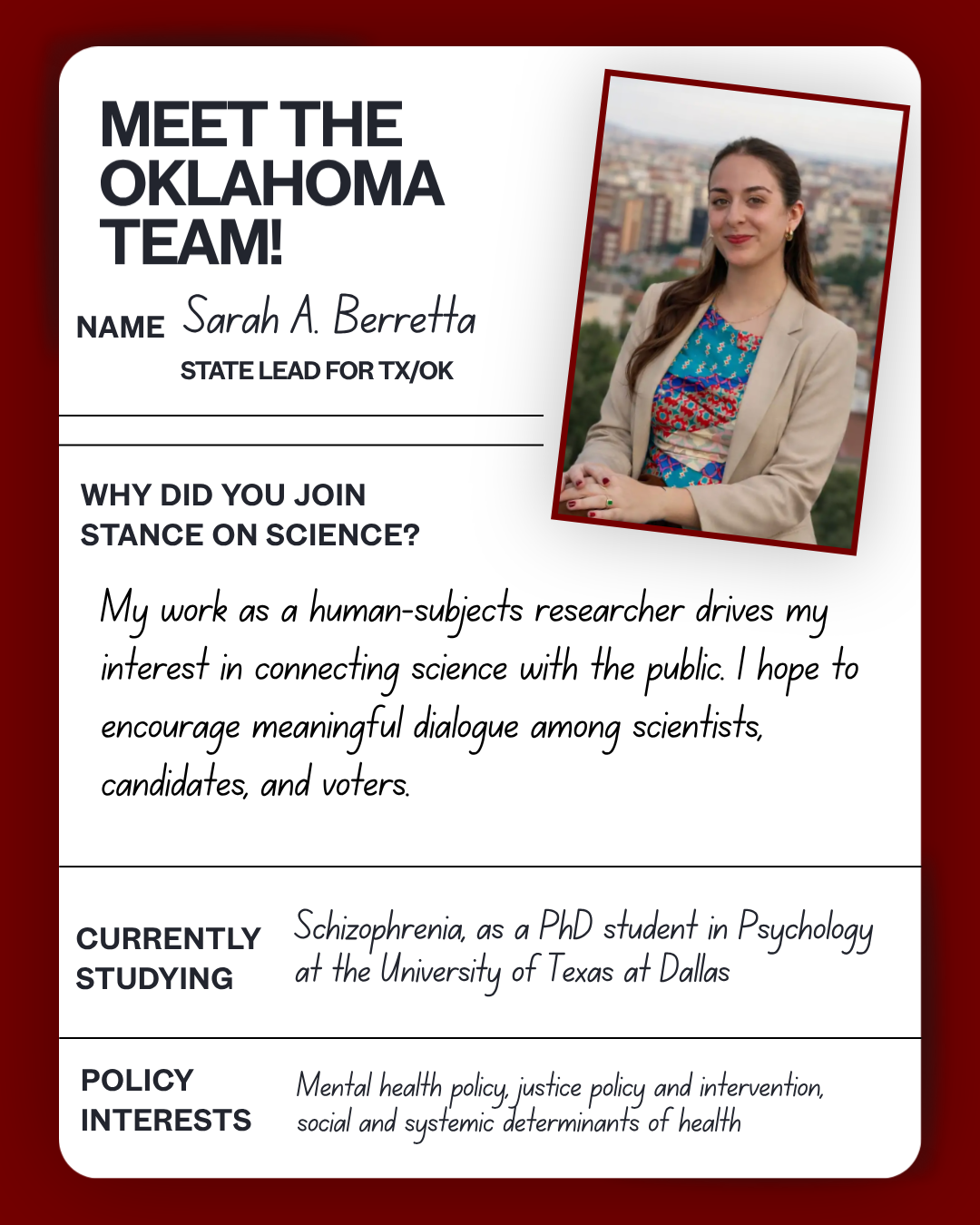
  • Meet the OK team: Sarah A. Berretta
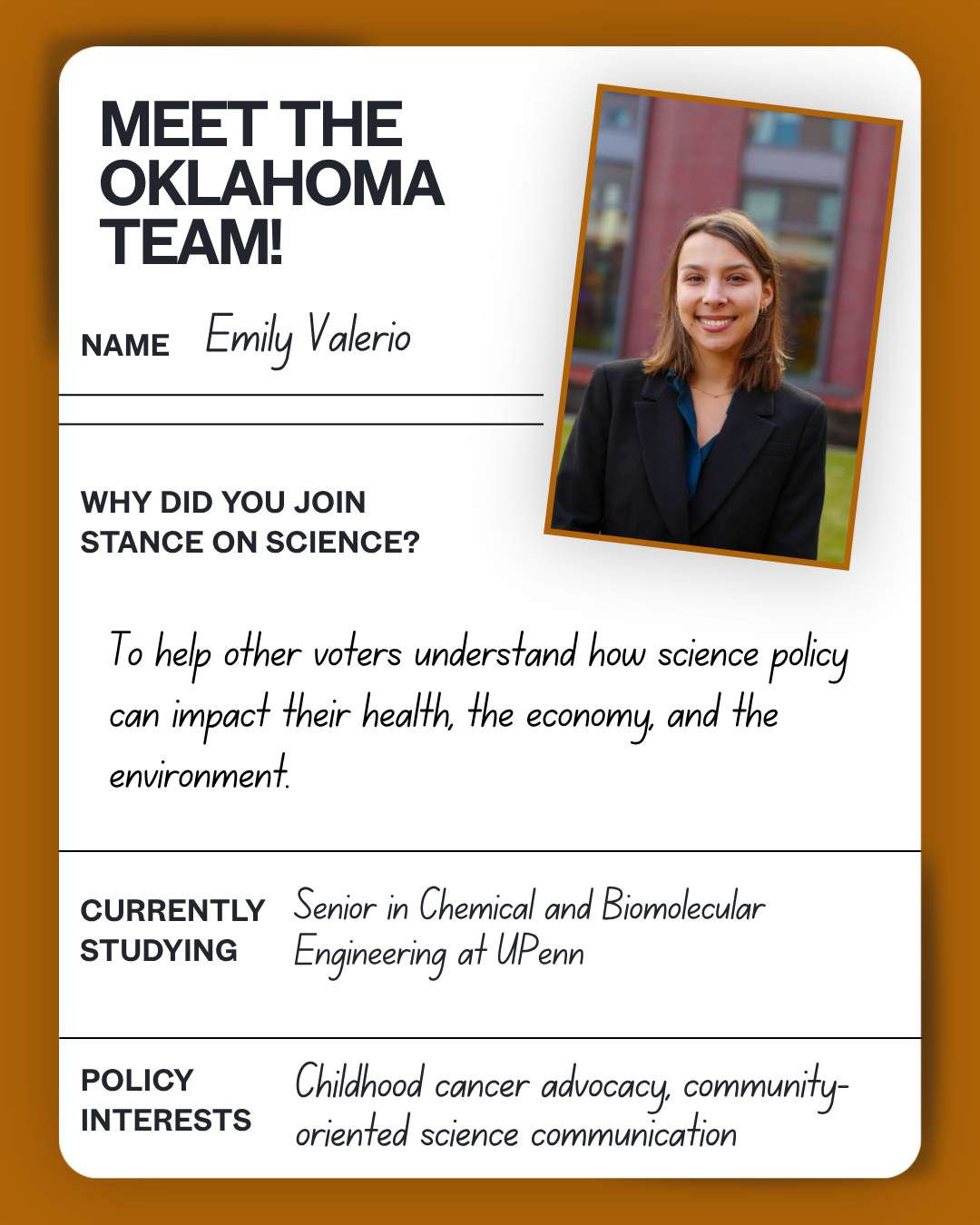
  • Meet the OK team: Emily Valerio
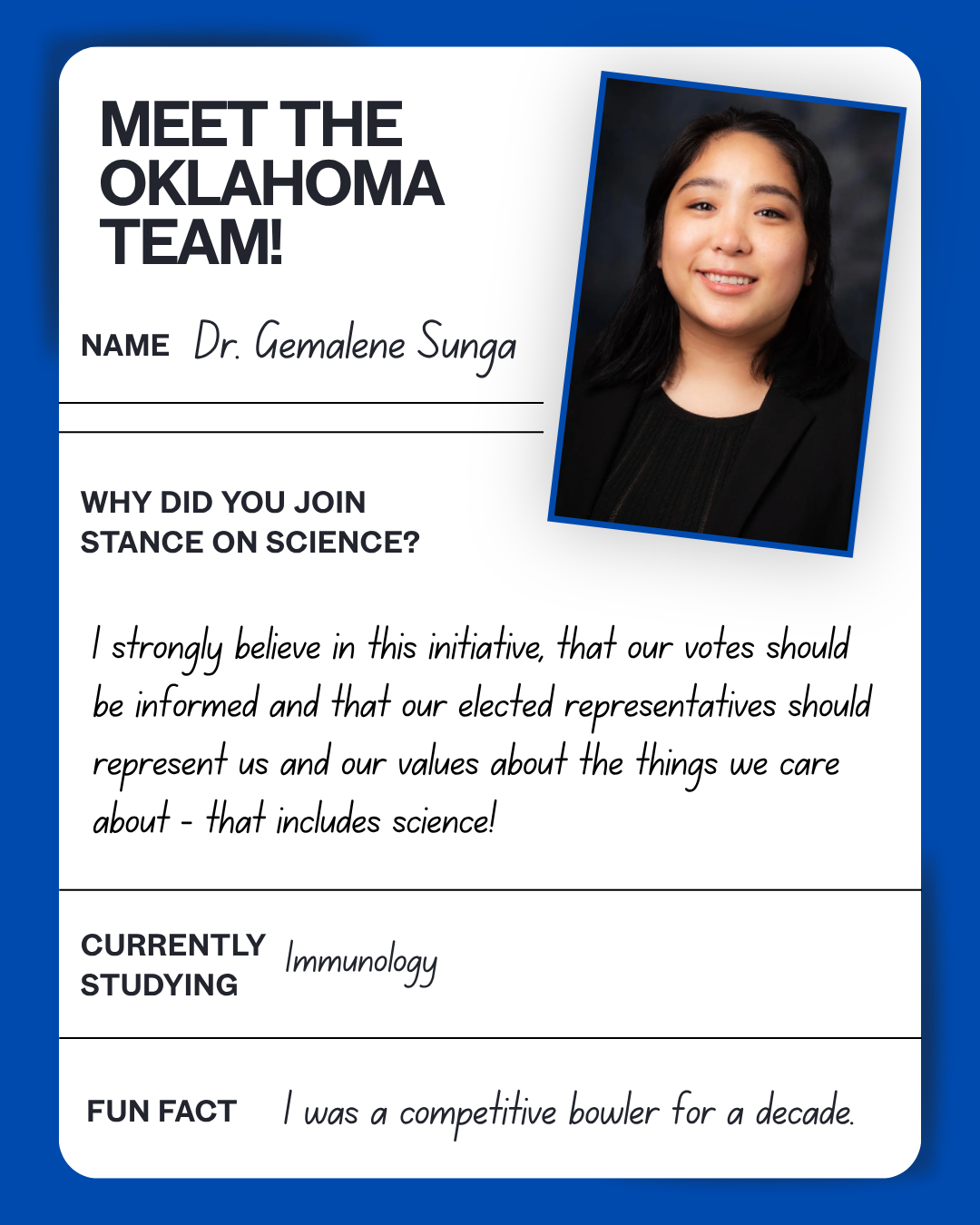
  • Meet the OK team: Dr. Gemalene Sunga
  • Meet the OK team: Sruthi Srinivasan
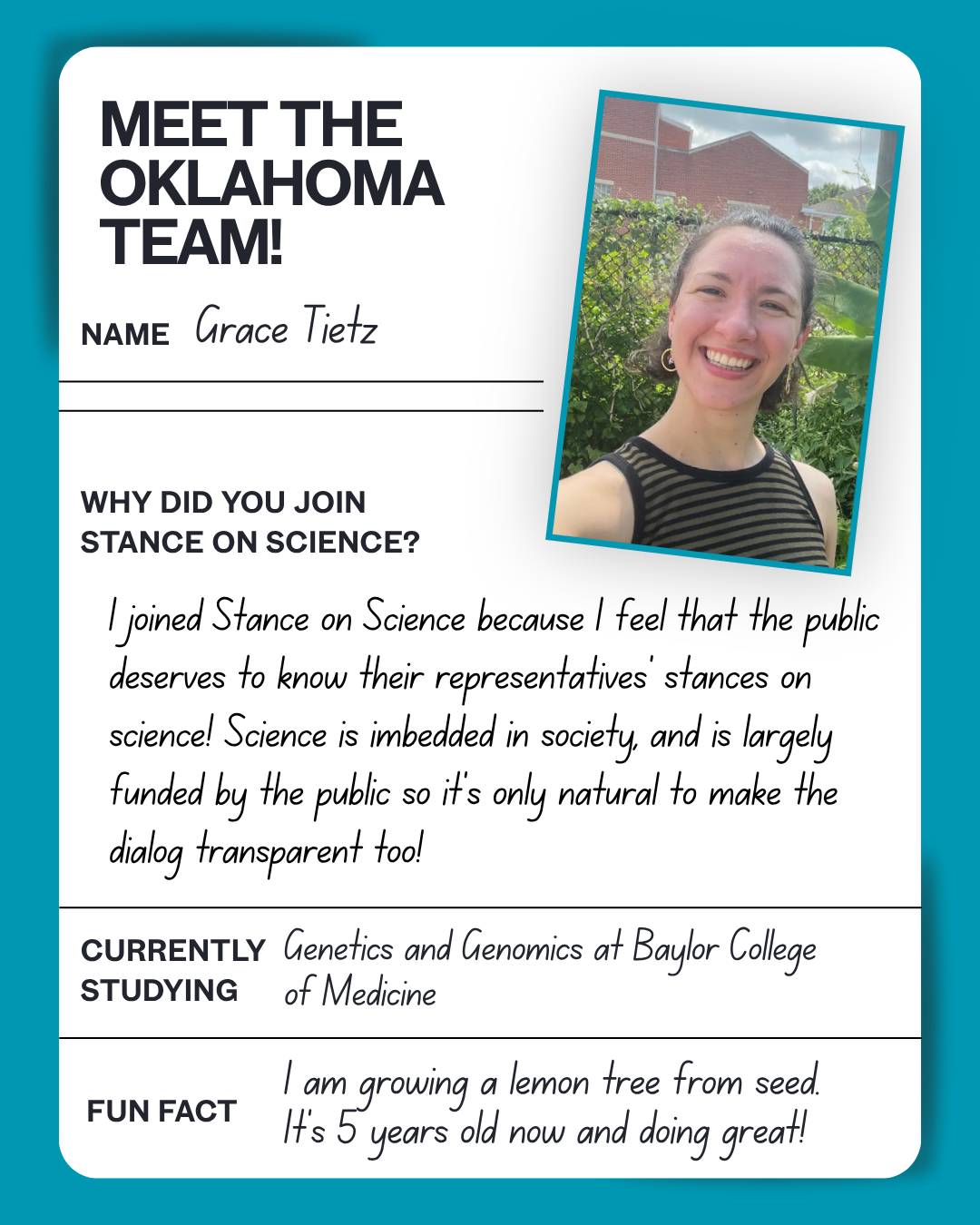
  • Meet the OK team: Grace Tietz